Microsoft’s M12 lays out investment strategy, aims to make the corporate VC community more ‘founder-friendly’ - GeekWire

Nagraj Kashyap, corporate vice president and global head of M12, speaks at the M12 Summit. (Nate Gowdy Photo)

In just a matter of weeks, Microsoft went from a customer of Directly's to an investor.

The San Francisco-based company finds and compensates expert users of a product to help come up with detailed answers to complicated support issues that can later be used to automate the customer service experience. Directly did a 45-day test with Microsoft, recruiting expert Excel and Xbox users to supply customer service intel for the respective departments. Apparently Microsoft enjoyed the experience, because just a few weeks later, the tech giant invested in the startup.

"The impact was not only the ability to transform their support equation, but to start to make automation work at scale and they saw an impact across not just Microsoft, but potential for all of Microsoft's customers," Directly CEO Antony Brydon told GeekWire. "We had light connections (with) the venture group before that, and … we just started talking and it became an investment in about three weeks."

Directly is one of 78 companies Microsoft's venture capital arm M12 has invested in since it was founded three years ago. The investment unit has about 25 employees today, and only about half of them are actually working on investing in companies. The rest are working directly with the companies in M12's portfolio to help them succeed and find the right resources at Microsoft.

Directly CEO Antony Brydon. (GeekWire Photo / Nat Levy)

"That is actually the biggest thing we do," Nagraj Kashyap, corporate vice president and global head of M12 said about helping companies out post-investment.

Last week, M12 representatives, venture capital firms, Microsoft executives and leaders of the nearly 80 portfolio companies came together for the first time at the inaugural M12 Summit. GeekWire got access to a portion of the event, as the tech giant took over the Four Seasons Seattle hotel.

As top Microsoft executives like CEO Satya Nadella and Executive Vice President of Business Development Peggy Johnson spoke, more than 200 meetings between startup leaders, M12 and other investors sparked and continued conversations around partnerships and big funding rounds. Microsoft aimed to show how serious it is about M12 as a major investor to both bolster the Seattle tech ecosystem and become a global name in the investment community.

Kashyap helped spin up M12 three years ago, coming over from Qualcomm, where he led the chipmaker's venture capital arm. From Qualcomm he brought a philosophy of focusing on the founder and the startup, rather than his own company.

"If you do right by the company that you're investing in, they will do well," he said. "And if they do well, not only do you get a financial return, but the reason you're doing it, you get some mutual benefit to your parent company."

Kashyap and M12 are pushing the corporate venture capital community to be more founder-friendly, unveiling a plan to get other investors to adopt some core priorities. Those include being upfront about why M12 chooses to invest or pass on a company and ending terms that favor Microsoft over the startups that it invests in.

The M12 Summit in Seattle. (Nate Gowdy Photo)

What Microsoft is and isn't looking for

Microsoft is focused on selling to big corporations primarily. So M12 is looking for startups that do the same thing. And that means consumer-facing companies are typically not a great match for M12.

"We don't want to invest if we cannot add value to the company," Kashyap said. He continued: "Why would somebody take my money if I can't help them afterwards? So a company that's doing purely consumer stuff is very hard for us to help."

M12 has invested in companies focused on Microsoft hotspots such as AI, cybersecurity and employee productivity. But it has also gotten involved with companies outside Microsoft's traditional areas of expertise, including retail. Cooler Screens, for example, is a Chicago-based company that makes digital cooler doors.

M12 has invested in Seattle-area startups such as Zipwhip, Pixvana and Outreach. It has invested in startups in 11 countries, and M12 has offices in New York, San Francisco, Seattle, London and Tel Aviv. M12 also recently expanded its footprint to India.

Kashyap emphasized that the financial health of the startups is key to M12's decision process. They need to be able to stand on their own, with or without help from the tech giant.

Each of the startups GeekWire interviewed described a rigorous due diligence process before Microsoft decided to invest. However, the company was straight forward throughout the process.

"I think it's always difficult when you're raising money and talking to VCs and working with partners if there's ambiguity and you never really know where you stand in the process, but M12 [was] always very clear," said Matt Fairhurst, CEO of Skedulo, one of M12's most recent investments. "They run a really clean, tight process and they were clearly committed to giving us some kind of indication whether it was a yes or a no."

Skedulo CEO Matt Fairhurst. (GeekWire Photo / Nat Levy)

M12 led a $28 million funding round for Skedulo, bringing the company's total funding to more than $40 million. The startup has offices in San Francisco, Vietnam, Australia and the U.K. and aims to simplify managing a mobile workforce and scheduling jobs for groups like field technicians and caregivers.

Once you're in with Microsoft, the founders said, the company lives up to its end of the bargain of putting the resources of the tech giant behind the startups. One of the main reasons to take an investment from a big company is to integrate with various parts of the organization, such as the products and sales teams.

However, a lot of corporate venture capital arms promise more than they can deliver. Venture arms want to help startups, but the rest of the company sometimes doesn't share that same commitment, founders said.

"I think a lot of other corporate VCs, the team means well, but the entity doesn't intend to the same thing," said Deidre Paknad, CEO of WorkBoard. "The commitment stops at the edge of the fund and the VC group and doesn't go deeper into the organization."

WorkBoard CEO Deidre Paknad. (GeekWire Photo / Nat Levy)

M12 first invested in WorkBoard's $9 million Series A round in late 2017 and re-upped with the startup's Series B round announced just last week. WorkBoard helps companies see through their strategic plans by using analytics and artificial intelligence on a cloud-based platform that works across mobile apps.

Microsoft wants to live up to its promises by using its massive global sales teams to help sell the startup's products and integrate them with widely-used tools such as Skype and Microsoft Teams. Harnessing the power of one of the world's most valuable companies is a boon to startups, but just as important is access to key executives, veteran product and marketing teams and more.

The involvement of Microsoft's Peggy Johnson in M12 is important for the venture arm. As Microsoft continues to evolve under Nadella, having a high ranking champion for the investment division assures that it will continue to get buy-in at the highest levels.

"You just get access that would be harder to get for a smaller company: access to key executives, access to teams," said Omar Tawakol, founder and CEO of Voicea, an enterprise voice collaboration startup with its own digital assistant named Eva.

Before Voicea, Tawakol led BlueKai, a company that operated a large repository of customer data that allowed advertisers to better target messages to specific audiences and was acquired by Oracle in 2014. Tawakol, whose company is part of M12's vast portfolio, said it still takes work to make the relationship with Microsoft a strong one, but it can propel a startup to the next level.

"They're not going to do anything irrational. They're not going to just be nice and roll out the carpet and hand you some integrations," Tawakol said. "But it'll give you a chance. And if you do it right, that'll be very helpful for you."

Omar Tawakol, founder and CEO of Voicea. (GeekWire Photo / Nat Levy)

Doing what's best for the founder

Microsoft wants to start a movement in the corporate venture community to present more favorable terms for startups. Kashyap promised that M12 will no longer include "right of first" terms in its investments. That's when a startup wants to sell all or some of the business, but the corporate investor gets the first shot at buying before any other suitor.

These terms are challenging for startups because they can scare away potential investors or buyers. Kashyap says M12 tries to limit its use of right of firsts, but it has employed them in the past. But M12 pledged to stop using terms like these in its investments entirely.

Kashyap wants to encourage fellow corporate investors from big companies such as Amazon, Google and others to join M12's pledge to give more favorable terms to startups. He acknowledges it will be a challenge to get buy-in from others, but Kashyap said he believes that if investors do right by startups, the companies will do well, which benefits the entire ecosystem.

"Not everybody's going to like it, but change doesn't happen if you're not willing to take the lead," Kashyap said. "And so we felt that we were in a position where we are established, we've shown a track record of being founder-friendly. So we can speak from a place of truth. And that's why we want to push this."

Review: Atlas Kitchen Takes Diners on a Flavor-Loaded Trip Across China - Eater NY

In the final decades of the 20th century, the Upper West Side became a hotbed of Sichuan cuisine. Chains like Empire Szechuan concentrated there, and one of our earliest Sichuan chefs, Wei Kai Chang, established himself at a restaurant simply called Szechuan. So it's not too much of a stretch that this neighborhood flourishes again as a bastion of regional Chinese cooking. Part of the reason is the proximity of Columbia University, where Asia-born students and faculty crave restaurants that provide a better taste of back home.

The latest newcomer, Atlas Kitchen — whose website boasts "located next to Columbia University" — indeed excels at not just one regional style of Chinese cooking, but several. Pack your bags, because we're going on a culinary tour of China.

Chef Kaiyuan Li is a Hunan native and a 20-year veteran of the New York dining scene, previously working at Hunan Manor. Dishes from that province — where sour and spicy flavors and dried, smoked, and pickled ingredients are prized — have a major presence on the menu. Sichuan food is also a frequent menu inspiration at Atlas Kitchen, with some dishes miraculously transformed.

Chef Kaiyuan Li and owners Haocheng Sun and Dong Chen (left to right)

That old chestnut Chongqing chicken — you know, the ubiquitous heap of dried red chiles and bony chicken morsels — is here improved with garlic slices, extra oil, a crispness to the chicken tidbits, and tiny twists of dough called ma hwa, which are being seen in northern Chinese restaurants in Flushing. And Cantonese, Shanghainese, and Chinese-American food also appears. But Li does not always stick to tradition here, often innovating on classics of the genre.

Situated near the corner of 109th Street and Broadway, the restaurant has a boxy modern premises, with murals wrapping around two walls created by famed artist Qiu Anxiong, who was born in Chengdu. The mural is a continuation of his video animation series "New Classics of Mountains and Seas," which depicts stylized skyscrapers and pagodas poking through the clouds as birds symbolizing airplanes waft by. The art creates a calmness in the restaurant, which mounts a menu that flies to the four corners of China for its inspiration.

Many say that Hunan food is hotter than Sichuan, but that's not the case at Atlas Kitchen, though many dishes are righteously spicy. The red chiles printed in the margins of the menu are a relatively good indicator.

Steamed fish head with red chiles

Front and center is one of the cuisine's preeminent offerings, a humongous steamed fish head ($30.95) finished with red-hot oil, heaped with scallions and chopped chiles. The specimen is a buffalo carp, and more of the collar than usual is generously included, so diners don't have to poke at the eyes and pull swatches of skin away from the cheeks to reveal some of the sweetest reservoirs of flesh. Every morsel is delicious, and if your table is like mine, all that will be left is a heap of bones.

But the best Hunanese dish on the menu may be braised chicken wings, feet, and gizzards in vinegar sauce ($24.95), which rates two chiles on a menu that doesn't confer three. It arrives in a wash of tart yellowish broth made of preserved green pepper, with, on the occasion I tried it, a chicken talon sticking out of the broth and pointing accusatorially. The chicken parts are accompanied by various vegetables. What a lovely sight! Other don't-miss Hunan dishes include beef jerky, dry as driftwood yet spectacular in its addictive properties, and spicy dried tofu ($10.95), a pepper-flecked barrage of compressed tofu triangles that achieve the texture of Twizzlers, served room temp.

Some of the options are Li's own creations, such as a plate of miniature tomatoes and blueberries dotted with dried sour plums, whose sharp, salty flavor provides a contrast to the fresher, sweeter components. His dish called beef flank in dry wok — cooked using a German stewing technique, based on his experience in that country — is anything but dry. The small cubes of meat are braised in a pepper broth, then tiny fried wontons filled with beef are tossed in at the last moment as a bonus. One invention that doesn't work is braised fish with perilla ($28.95). The leaves, which belong to the same family as Japanese shiso, have been cooked to flavorlessness without adding much to the fish.

On the Sichuan side of the menu, successes include pig trotters with the meat removed from the bone and finely diced, then stir-fried with fresh green chiles. Their wonderful gluey quality remains. Among dishes from Shanghai and vicinity is "minced beef with cilantro and egg white soup," which represents the restaurant's take on West Lake beef soup. The Shanghai soup dumplings are good here, too, thin-skinned and bulging with broth, though smaller than average ($10.95 with crab, $8.95 without).

One of my favorite things on the menu is a fancified version of a classic Chinese egg custard: Steamed eggs with seafood ($15.95) treats a soft omelet as a seabed below an ocean of reddish, soy-based sauce in which sea creatures lurk, including squid, shrimp, white fish, and fake-crab surimi. Eat it by scooping up egg, sauce, and sea denizen from the bottom with the big spoon, then plop it on your plate on a hillock of rice.

On the other hand, you might want to avoid ordering rice entirely, since the menu includes two great forms of fried rice. The one called yan chow is a zippy take on a southern Chinese classic, rife with eggs and Spam. A Hunan fried rice is also available, shot with long beans, char siu, and fresh red bird chiles. One of the most intriguing regional dishes comes from Dongbei in the far northeast, where sweet and sour was supposedly invented. Fried pork in scoop ($16.95) is a ball of pork fried with a very thick and unabashedly sweet crust. While perhaps reviling its sweetness, you'll adore every bite.

Atlas Kitchen heralds a new type of Chinese restaurant in the city, one with a seasoned chef willing to take risks, while selecting favorite dishes from all over China. Heck, there's even a page called American Style, which includes such classics as beef with broccoli and kung pao chicken. It serves to restore Chinese-American food to its rightful honored place among Chinese cuisines.

Cost: Dinner for two, including one appetizer, two main dishes, fried rice, a shared dessert, and pot of tea, including tax but not tip, $95.

Sample Dishes: Potherb mustard bowl, steamed fish head, Hunan fried rice, fried pork in scoop.

What to Drink: This place is not fooling around when it comes to tea, and distinguished tea is not cheap. Small pots of tea served in ornate pots average $10, but in the Chinese tradition, water is added continuously to the pot, so the tea becomes weaker as the meal progresses.

Bonus Tip: Put together as large a table of diners as you can, because choosing among the many beguiling dishes will be less difficult. In addition, large parties are allowed to sit in the raised rear room, which provides views of the entire restaurant.

Amazon is using purchase data to sell targeted ads, which is creepy, but not because they've invented a mind-control ray - Boing Boing

Amazon is building out its ad-targeting program to allow for ad-buys like "people near a physiotherapist's office who've bought a knee-brace," and reports that the ads are incredibly successful.

What's interesting about Amazon's reference customers for the efficacy of their program is how trivial they are: figuring out that knee-brace buyers who live near a physio might patronize that physio is not exactly rocket surgery. There are a ton of these "signals" that are probably a good predictor of future actions: if you buy a baseball bat and ball, you might travel to a nearby park to meet some friends in the near future; if you look up car ratings, you might buy a car soon; and so on.

The insights are trivial: what's sophisticated is the targeting after the insights. In the age of paper car-buyers' guides, the only way to advertise to potential car-shoppers was to buy ad-space in those guides. You couldn't -- for example -- know when people were talking about buying a car with friends and show them an ad there. Surveillance capitalism has bequeathed upon us vastly improved means of identifying people who have some rare, widely diffused trait (say, people who recently called to price out a refrigerator repair and might be in the market to buy a new fridge, something the average person does between 0 and three of four times in their entire lives).

But what surveillance capitalists do is conflate their ability to identify people who share a trait with their ability to identify traits to look for in people. They imply -- or even claim outright -- that they can use machine learning to find nonobvious, even inexplicable signals that are precursors of some rare behavioral event.

That's the story of the rise and fall of Google Flu: first, Google claimed that looking at the search histories of people who were later discovered to have the flu revealed unobvious search queries that were reliable predictors of future influenza outbreaks. But they were wrong: it was a statistical mirage.

Some big data/surveillance capitalism companies even go farther and say that they can use the same machine-learning techniques to actually trick or coerce people into behaving in ways they wouldn't have otherwise contemplated: Cambridge Analytica famously claimed that they could make normal, reasonable people into Donald Trump voters by showing them carefully tailored Facebook posts.

But in retrospect, it seems that what Cambridge Analytica did was figure out how to find racists and convince them that Donald Trump would be a good president. It was a terrible outcome, sure, but way less worrying than if Cambridge Analytica had actually invented a Facebook-based mind-control ray.

The thing is that advertising has always been incredibly marginal: almost all advertising is "wasted" in the sense that it doesn't convince anyone to change their behavior. When a company like Google or Amazon starts to make billions by fielding a "vastly improved" advertising product, it means a couple of things have happened: first, they've figured out how to target a relatively obvious signal of commercial intention that no one else is targeting yet (think of when consumer packaged goods companies started sending sales-reps to maternity wards with baskets full of newborn supplies on the theory that harried new parents would just buy more of the same when those ran out) and second, that the combination of competition to target the same signal and regression to the mean among customers hasn't reduced its efficacy back to the margins.

Those "vastly improved" ads are often lifting the efficacy rate from less than one percent to still less than one percent: it's easy to double or triple the efficacy of something that works 0.01% of the time, but you're still talking about something that barely works at all.

If behavioral modification -- as opposed to behavioral targeting -- were as easy as its vendors claimed, the entire dieting industry would have gone out of business decades ago.

After all, these companies lie about everything, which is why we don't trust them: why would we assume that they are telling the truth in their sales literature?

Users of the self-service system can choose from hundreds of automated audience segments. Some of Amazon's targeting capabilities are dependent on shopping behaviors, such as "International Market Grocery Shopper" and people who have bought "Acne Treatments" in the past month, or household demographics, such as "Presence of children aged 4-6." Others are based on the media people consume on Amazon, such as "Denzel Washington Fans" or people who have recently streamed fitness and exercise videos on Amazon. The company declined to comment.

Just the Cheese, a brand run by Specialty Cheese Company in Reeseville, Wis., makes crunchy dried cheese bars that have taken off as a low-carb snack. By using algorithms to analyze how Just the Cheese's search ads performed on Amazon's site, the ad agency Quartile Digital noticed that people who searched for keto snacks and cauliflower pizza crust, both low-carb diet trends, also bought a lot of cheese bars. So Quartile ran display ads across the web targeting Amazon customers who had bought those two specific product categories. Over three months, Amazon showed the ads on websites more than six million times, which resulted in almost 22,000 clicks and more than 4,000 orders.

Amazon Knows What You Buy. And It's Building a Big Ad Business From It. [Karen Weise/New York Times]

(Image: Cryteria, CC-BY)

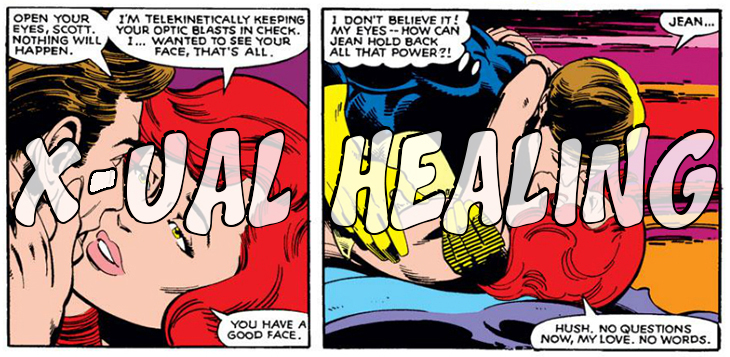
Uncanny X-Men Annual #1 is Marvel's Apology to Cyclops Fans [X-ual Healing 1-23-19] - Bleeding Cool News

There's only one X-Men comic in stores this week, but it's the most important one in a decade. Read on…


Sworn to sell comics for Marvel executives who feared and hated the fact that Fox owned their movie rights, The Uncanny X-Men suffered great indignities, but with a corporate merger on the way, the X-Men can finally get back to doing what they do best: being objectively the best franchise in all of comics.


Uncanny X-Men Annual #1
(W) Ed Brisson (A) Carlos E. Gomez (CA) Salvador Larroca
Cyclops!
Rated T+
In Shops: Jan 23, 2019
SRP: $4.99

The story opens on Muir Island "several weeks ago," as Cyclops' optic blast explodes out of his grave, followed by the beloved mutant leader crawling out and back to life. This took place prior to Extermination. We then get a flashback to "several years ago" where a young Scott Summers is walking through Cambridge, Massachusetts and encounters mad scientist Professor Tavin Tierney, who has created a giant robot named Straggon which is rampaging on the MIT campus. Cyclops stops the robot by incapacitating Tierney and is thanked by a young student named Paul Douek, who appreciates cyclops saving him, letting him know he has a wife and a baby on the way and offers to repay the favor anytime. Side note: the "old-timey" pages here look so much better than most modern pages in Marvel comics. It's not that colorists are untalented, but the modern coloring techniques just don't look good on paper, IMO, YMMV. They look better on a screen.

Marvel should just color all their books like this. Seriously.

Anyway, ten years later, Kid Cable shows up at Douek's house with the remnants of the Phoenix Cage, created in Secret Avengers #26 as part of an attempt to imprison the Phoenix Force during Avengers vs. X-Men. Kid Cable wants Douek, now an engineer working for Tony Stark, to develop a much smaller version of the device and says he'll see him in two years. Two years later, after the funeral of Scott Summers on Muir Island, Kid Cable and Douek visit the lab where Cyclops' real body is being held. Kid Cable explains what Emma Frost did during the Death of X event, but this is also an explanation of what Marvel did to poor Scott.

Just as Douek's desires for a better Cyclops echo those of X-fans who spent the past decade wishing Marvel would stop the character assassination.

Kid Cable and Douek implant the new, smaller Phoenix Cage into the chest of Cyclops' corpse. We then flash forward to "several months ago," to the scene in Phoenix Resurrection where the Phoenix Force brings Scott Summers back for a few moments to share one last kiss with the newly returned Jean Grey. During that kiss, the Phoenix Cage absorbs some of the Phoenix Force's power, not destroying it like last time because this time it's entering willingly. Back to "several weeks ago, Kid Cable and Douek greet the newly returned Scott at the gravesite, their mission successful. Back at Kid Cable's hideout, Douek explains how they brought Scott back and thanks him again for saving him back in the day when things were colored nicer. One week later, as Kid Cable heads out to kick off the Extermination event, he forces Scott to stay behind. A week after that, Professor Tierney is released from prison and finds a note in his lab with Paul Douek's address on it, left there by Kid Cable.

Back at Kid Cable's hideout, as Kid Cable and Cyclops drink root beers (see the final scene in Extermination), Kid Cable briefly recaps the events of that series. When Cyclops questions how Kid Cable could claim to do what he does to protect the timeline while simultaneously screwing with it to bring his father back, Kid Cable speaks on behalf of all Cyclops fans once more.

Kid Cable then offers Cyclops a test. He tells him that the X-Men are currently in the midst of their final battle with X-Man in last week's Uncanny X-Men #10, sure to meet their doom unless Cyclops shows up to save them. But at the same time, Professor Tierney is on his way to Paul Douek's house to murder him, his wife, and their child. Cyclops can only save one. Which will he choose?

Of course, Cyclops saves Douek, and we know what happened to the X-Men. The next day, Cyclops and Kid Cable visit the beach in British Columbia where X-Man disappeared himself and the X-Men, and he explains what we already knew: that everything that happened to him in the years leading up to his death was the result of an intentional attempt to get rid of the X-Men in order to focus on properties whose movie rights were owned by Marvel, like the Avengers and the Inhumans.

But with the X-Men's movie rights returning to Marvel thanks to the Fox/Disney merger, that's all over now.

Now, Scott Summers will set everything right by rebuilding the X-Men, starting in Uncanny X-Men #11. Even Wolverine will have a chance to redeem himself. A bright new future awaits our beloved mutants, thanks to the return of their true leader.

Apology accepted, Marvel. Now don't screw it up again.

There was no competition, but we find it hard to believe anything could have beaten this one either way.


Other stuff happening in the X-verse:

Matthew Rosenberg, writer of Uncanny X-Men, has quit Twitter. Mostly.

In our poll last week, over 40% of voters said the X-Men Disassembled storyline wasn't worth the X-Men line relaunch. 36% were undecided. Just 23% thought the story made the end of all the previous generation of titles worth it.

If you can't get enough Cyclops (and who can blame you), our friendly competitors at Adventures in Poor Taste have been publishing Cyclops articles all week.

See previews of next week's Exiles finale, Weapon H finale, Age of X-Men Alpha, Black Panther vs. Deadpool, X-Force, and Dead Man Logan.


Read more X-ual Healing here:

About Jude Terror

A prophecy says that in the comic book industry's darkest days, a hero will come to lead the people through a plague of overpriced floppies, incentive variant covers, #1 issue reboots, and super-mega-crossover events.

Scourge of Rich Johnston, maker of puns, and seeker of the Snyder Cut, Jude Terror, sadly, is not the hero comics needs right now... but he's the one the industry deserves.

(Last Updated January 27, 2019 11:33 am )

Related Posts

None found

Meet China’s New Generation of Tastemakers - WWD

BEIJING — There's a global shift in fashion image making under way. After a phase in which the aesthetic skewed to the polished and perfected, a more sensual and delicate kind of beauty seems to be taking root, from Glen Luchford's eclectic Gucci campaign style to the dream-like Dior spring 2019 images by Harley Weir, and Beyoncé's American Vogue cover photographed by Tyler Mitchell.

Simultaneously in China, after years of magazine covers and indoor studio editorials Photoshopped to perfection — a style pioneered by the likes of Chen Man, Zack Zhang and Yuan Gui Mei — a new breed of fashion creatives is peering through a different lens.

The late photographer Ren Hang, known for his absurdist and sensual work, was an early proponent of this alternative view, and other creative talents are now following his path in search of new ways to portray Asian beauty.

With the start Wednesday of Shanghai Fashion Week, WWD highlights here eight fashion stylists, photographers, makeup artists and hairstylists who exemplify the Chinese fashion industry's evolution in recent years.

Leslie Zhang, photographer

Leslie Zhang, who happens to have the same name as the deceased Hong Kong film star, is arguably the leading figure of his generation. "The constant themes in my work are the beauty of China and romance, especially Chinese faces and the iconography of the late 20th century and early Aughts of China. I also try to go beyond what has already been done and create a new romantic language that's born out of the past," Zhang said.

The 26-year-old, who grew up in Yangzhou and Nanjing, first took up a camera while studying film editing at university. "I was first sought out by fashion editors who had seen my personal works online, and from whom came my first commissions, and the rest is history," he said.

Having worked with the Chinese editions of Vogue, Elle, T Magazine, Wallpaper, Marie Claire and more, Zhang said his career highlights so far have been the opportunity to work with Robbie Spencer on both Another Man and A Magazine Curated by Simone Rocha.

Scenes from his upbringing in China influence him greatly, as well as Japanese photographers. "I think there is the great beauty in China from the past 40 years, but it's often ignored in terms of aesthetic importance. It's in the collective living memories of my generation. I think it's a hybrid of modernist, communist and traditional Chinese influences, also hit by waves of post-modern movement from Hong Kong, Taiwan and the West," he said.

The photographer is putting together a second book of his personal work and will make a limited edition of an independent Chinese fashion publication called Sauna before the summer.

Audrey Hu, fashion stylist

A self-proclaimed "Asian gothic incarnation in contemporary China," Audrey Hu, 30, is a Shanghai-based fashion stylist and longtime collaborator of Leslie Zhang's. She is fascinated by "anything that involves ritual, fantasy, symbolism and mythology." Her styling is often quirky, fresh and mystical, and sometimes ultra-glam with the right amount of offbeat to it.

"Love, heroism, ambition, betrayal and family are the foundations of storytelling and are so timeless. When I start planning a story, I always have my characters such as heroes, monsters, villains, gods and goddesses in mind," she said.

A women's wear graduate from London College of Fashion, Hu stumbled across an opportunity to work with Tim Lim, group fashion director of Modern Media, and "started weaving stories from a stylist's point of view," Hu said.

Recently, Hu did a cover story with photographer Feng Li in Chongqing for Faz Quarterly, the German newspaper's fashion supplement. "We featured a lot of emerging young designers from Asia," she said. "The backdrop is an urban jungle kind of feeling, along the Yangtze River. Chongqing is a magical place — it looks a bit like New York from the other side of the river, skyscrapers and all, but when you look closely, it has houses and architecture looking like straight out of 'Spirited Away,'" said the stylist.

She also collaborated with London-based designer Asai, one of her close friends, and photographer Alexandra Leese for an i-D editorial shoot in Moganshan, Hangzhou.

Feng Li, photographer

Chengdu-based Feng Li began his career as a photography artist in 2005, but it wasn't until 2018 he got into the field of fashion photography. He signed with fashion agency Concrete Rep in London and shot his first editorial with System magazine, followed by a collaboration with British Vogue's Venetia Scott.

As a street photographer, Feng has won numerous awards, including Discovery Award at the Jimei x Arles International Photography Festival and Best Photographer Prize at the Jinan International Photo Biennal.

Feng describes his fashion work as "absurd, but in my opinion, such absurdity is interesting and incredible. Every photo is a story, and every shot is wonderful. He is motivated by curiosity and there is a clash of fantasy and reality in his work. It is grounded in the streets of China, yet the subjects through his lens are often too glamorous and ostentatious for the setting.

"I just want to express my preferences as much as possible in my work," he said. His recent work includes the cover of the latest issue of Modern Weekly, Re-Edition and Faz Quarterly.

Feng is preparing for two exhibitions in China, one in Yingchuan and another in Wuzhen. He is also working on a solo exhibition in Berlin that will open in April.

Jeff Lee, stylist

Shanghai-based fashion stylist Jeff Lee, 34, is known for his straightforward and clean aesthetic. Apart from working on editorial shoots, he works closely with award-winning Chinese actress Zhou Xun on her public appearances and takes on several TV drama styling gigs.

"I find inspiration in my friends and timeless elements from classic films," Lee said. "Then I try to incorporate them with the personality of the subject to create an idea or image for the modern women of today."

An alumnus of Studio Bercot Paris, Lee sits at the core of China's fashion club. He is working on a new TV series with "some of my favorite actresses in China today," he said.

"I've also just shot for Vogue China with Michelle Yeoh. She is one of my favorite actresses of all time and the loveliest person," Lee said.

Having worked in the industry for a decade and witnessed the shift in taste, Lee finds it hard to generalize what he has seen, but he thinks "China has this energy of welcoming anything that's new. I feel like everybody is doing their own thing and experimenting with new ideas. I'm trying to do mine."

Zeng Wu, photographer

Born in the southern province of Hunan, fashion photographer Zeng Wu is known for this futuristic approach. A regular collaborator with top Chinese fashion publications, he is often inspired by music, movies and "surreal moments in life."

Zeng accidentally started his career in fashion photography. "I got interested in photography probably because of the transformation of Jay Chou through styling and photography when I was in high school. So I started to feel that being a photographer is a charming job. I was an economy student in university, but I started taking pictures of the fashion school's student works. Luckily, I won the grand prize of the National College Student Photography contest. Then got a chance to shoot for Modern Weekly and that's how everything began," he said.

He shot Jackson Yee in Celine by Hedi Slimane for the cover of T Magazine China's upcoming men's issue with fashion designer and stylist Xander Zhou, which figured as a milestone as Yee is a teen idol who many luxury houses are in hot pursuit of.

His recent memorable works include the cover of Marie Claire China's March issue featuring three top Chinese models; Wallpaper China's December issue cover with model He Cong, and the campaign for Chinese high-end women's wear brand Edition 10.

Cathy Dong

Cathy Dong, or Yingyao Dong, is a Shanghai-based fashion stylist who used to work at the creative agency Moodsight, founded by Xiaomu Fan, a go-to fashion agency for many large Chinese fashion brands.

A marketing graduate from the University of Sydney, Dong began at Harper's Bazaar China as a fashion assistant in 2015 and there met her mentor Fan, who was then the magazine's fashion and style director. While at Harper's, she worked with Fan on magazine and commercial shoots, fashion shows and celebrity styling work.

"It's pretty valuable experience to me and helps me to distinguish the differences from these jobs, therefore I find what I love and my strength," she said. Dong went solo last year.

She collaborates closely with commercial Chinese fashion brands and wants to change their perception of beauty because they are the ones with thousands of stores nationwide and big advertising budgets.

"I try to break the homogenization of aesthetic and create more possibilities for my clients. Most people adore the overly Photoshopped Internet influencer look. I am not saying they are not good, but I feel like we need to contain the aesthetic diversity," she said.

Dong's cover shoot for InStyle China with Mei Yong, who won the Silver Bear award at the 69th Berlin International Film Festival, and a series of covers with top model Liu Wen and actor William Chan for the December issue of Marie Claire China are examples of her push for greater diversity.

Xin Miao, makeup artist

Xin Miao is one of the most in-demand makeup artists in China, his name appearing in almost every fashion magazine, from the Chinese editions of Vogue and Elle to T Magazine, as well as on many leading brands' ad campaigns in the country.

Xin describes his approach as highly versatile —  either extremely simple or dramatically complex. He finds inspiration in everyday life, vacations and Chinese culture from a very specific period.

"I am not very interested in the current Chinese aesthetics and tastes. I like to explore China aesthetics from the past. The Twenties and Thirties of Shanghai have always fascinated me," he said.

He enjoys being a makeup artist. "I like everything about beauty since I was really young. Every time my mother put on makeup, I would look at her for a long time. It's such a beautiful transformation," he said. "It is with this identity that I got to appreciate fashion, art and music, and grow stronger through continuous collaboration with all the amazing talents I get to work with."

His recent work includes Miu Miu's special campaign for Chinese New Year and Vogue Me's October cover featuring model Benno Bulang and Dilraba, the most famous Uighur actress in China. Xin also worked with A Magazine and Another Man.

Minghu Zhang, hairstylist

Like Xin Miao, Minghu Zhang is an in-demand Shanghai-based hairstylist. He thinks hair styling is akin to making a sculpture or an installation. "Human hair is a kind of fiber. So what I do can be seen as a kind of 'fiber sculpture.' I use this material to create stacking, interweaving and shaping to create art," he said.

Zhang thinks it's important to have a well-rounded understanding of fashion photography. "Creating a fashion image is a demanding job for the team, which requires perfect integration from photography to styling to makeup and hairstyle. I always ask the team to understand the partner's ideas so that I can offer the 'right' hairstyle."

Once an art major at university, he moved to Shanghai after graduation and began his pursuit in the fashion industry. Zhang sees modern China's aesthetic as a mixture of his generation's life experience, influenced by Nineties Hong Kong movies, especially martial arts films; Chinese classical architecture; literary novels, and urban colors.

Zhang is a frequent contributor to top Chinese fashion publications, including Modern Weekly and the Chinese editions of Marie Claire, Wallpaper, Numero and Vogue, and is doing several shows at Shanghai Fashion Week.

Phil Spencer talks Microsoft's new studios and its commitment to PC gaming in 2019 - PC Gamer

Microsoft is on a video game spending spree. In the past year it's bought six studios, including Forza Horizon studio Playground Games and Hellblade developer Ninja Theory, and founded a new one. For PC gamers, the two most striking acquisitions are Obsidian and inXile. Both are synonymous with PC gaming—Obsidian's founders are the same developers that made classic RPGs Planescape: Torment and Fallout 2, while inXile's CEO Brian Fargo co-designed Wasteland.

The opportunity for collaboration and shared learning across our new and existing teams is potentially what's most exciting to me.

Phil Spencer

Microsoft hasn't done PC gaming well over the past decade. No one liked Games For Windows Live, its last aborted Xbox-on-PC platform, and Microsoft's own games are today all sold through the Microsoft Store, which is still a pain to use nearly four years into the life of Windows 10. But it has been getting better, and the decision to buy two leading PC developers suggests the company is taking PC gaming more seriously than ever.

With that in mind, I spoke to Phil Spencer, Microsoft's head of gaming, about how hands-on Microsoft intends to be with its new studios, whether they'll allow more Microsoft games to release on Steam, and what Microsoft has learned from working with other studios in the past, including the acquisition and closure of Fable developer Lionhead.

Spencer tells me via email that the Obsidian and inXile deals were in part an attempt to "create depth across platforms and genres of expertise," specifically RPGs. I ask whether he thinks the studios will adjust their focus away from PC gaming to a broader platform base, and he says he doesn't expect so. It will be up to the studios to decide what platforms to make games for, he says. 

Microsoft bought Forza Horizon dev Playground Games last year.

"We want to empower game creators… to extend the reach of their games to the broadest global player base possible. That said, we…[understand] that there are certain types of games that may be best experienced within a specific context, or with a specific input method (keyboard and mouse, controller, etc)," he says.

"Obsidian, inXile and all our studios will have the resources to reach players on any device and we'll support the decisions each studio makes regarding the platform and features that let them deliver the experience they want for gamers."

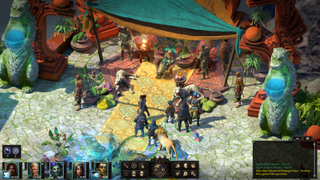
It's worth noting that both inXile and Obsidian appear to be independently broadening their horizons. Obsidian's most recent game, Pillars of Eternity 2, released on PC last year, and will come to consoles later this year. Its 2016 RPG Tyranny was, and remains, PC-only. Its next game, The Outer Worlds, possibly out in August, will launch on PC and consoles at the same time. Past Obsidian RPGs have come to PC and consoles simultaneously, including Fallout: New Vegas and South Park: The Stick of Truth.

It's a similar story for inXile. Wasteland 2 came to PC in 2014, a year before consoles—but Wasteland 3 is set to launch across platforms at the end of this year. There's no indication, however, that either studio will move away from their role-playing roots, which is good news for PC RPG fans.

Art for inXile's Wasteland 3

Spencer says Microsoft's main role with its new studios is to provide "tools, talent and resources" to the development teams. He doesn't want studios to change their culture, and points to Minecraft developer Mojang, bought by Microsoft in 2014, as a good example. "We want each studio to retain their unique spirit and culture while feeling empowered by the collective resources they now have as a member of Xbox Games Studios and Microsoft. We're here to help lift any of the distractions and challenges that have kept them from what they do best. 

"The opportunity for collaboration and shared learning across our new and existing teams is potentially what's most exciting to me. It's been inspiring to hear stories already of how the incredible talents across these teams are reaching out to connect, share and learn from one another."

The studios themselves are saying the same thing. Ever since the deal was announced, inXile's Brian Fargo has talked about how the studio will continue to make the same kinds of RPGs it always has, but that now they'll have more resources to pump into development.

Following the deal, he told Eurogamer that Microsoft will not influence the kind of games inXile makes. "They've not once said 'we'd really love you to do more of this or less of that'—that's never been a conversation. Really, it's going to be up to us, and very much us talking to our fans about the things they'd like to see. We're not necessarily walking away from isometric [games] at all. There's still some great things you can do with it that haven't been done yet."

In a video released shortly after the deal was announced, Obsidian was similarly positive, and chief operating officer Chris Parker said that the team "absolutely have to keep things as they are."

Xbox Game Studios

Want to know what each of Microsoft's game studios is developing right now? Here's a full rundown.

It all sounds idyllic—but some of Microsoft's past acquisitions haven't exactly gone to plan. Microsoft bought Age of Empires developer Ensemble in 2001 and closed it after the release of Halo Wars in 2009. It shut down FASA after the development of Shadowrun in 2007. Microsoft bought Lionhead, the studio behind the Fable series, in 2006. Ten years later, it shut the studio down. How will Microsoft ensure those failures don't repeat? 

"I'm very proud of the work that Microsoft and Lionhead did together on the Fable franchise," Spencer says. "It is always an incredibly difficult decision to close a studio or cancel a game. In every one of our past studio additions we've learned from the experience, from aligning on goals ahead of acquisition, to decisions on whether to relocate teams and/or retain existing organizational structures. That learning and planning has paid off when I think of Rare and Mojang."

It's worth noting that, in interviews, most of the staff that worked on Lionhead games have described Microsoft as helpful, and far from interfering. But inevitably, there has been friction: Former Lionhead art director John McCormack has described how he argued with Microsoft on the marketing and box art for Fable 2. Phil Tossell, a former gameplay director at Rare, has spoken about the "severe culture clash" following the Microsoft acquisition. Whether cases like these will repeat themselves with inXile, Obsidian, or any of Microsoft's other recent acquisitions remains to be seen. 

Obsidian's Pillars of Eternity 2: Deadfire

Delivering great gaming experience to PC players is critically important to the future of Xbox and gaming at Microsoft.

Phil Spencer

One hanging question is whether future inXile or Obsidian games will be released on Steam, or whether they'll be exclusive to the Microsoft Store. The company's insistence on releasing most Xbox Games Studio games exclusively on the Microsoft Store—including Sea of Thieves, Forza Horizon 4 and Gears of War 4—has been a sore point for PC gamers, largely because the store is, in James' words, "an abomination." Microsoft knows that it has a lot of work to do to improve it, and Spencer adds that company's "first priority is delivering a new Store experience for games that factors in all of our learnings from past challenges on the PC."

I ask him whether we can expect future Xbox Games Studios games to release on Steam as well as the Microsoft Store, to which he's non-committal. "It's a good question and something we've spent a lot of time thinking through. I expect us to share more details on our plans here soon."

The latest on Wasteland 3 is that it will still release on Steam and GOG, and Obsidian's The Outer Worlds is coming out on Steam, too—although that's being published by Take Two, rather than Microsoft Studios. The true test will arrive when one of these studios starts a new game, with Microsoft involvement from the start. 

Finally, I ask Spencer just how important PC gaming is to Microsoft right now, as a new gen of Xbox hardware approaches. "Delivering great gaming experience to PC players is critically important to the future of Xbox and gaming at Microsoft," he says, adding that the company has, as the creator of Windows, a "responsibility to invest in new ways we can benefit the PC player to help ensure they stay at the center of the experience."

"While we are proud of our PC gaming heritage, we've made some mistakes along our journey. We know we have to move forward, informed by our past, with the unique wants, needs and challenges of the PC player at the center of decisions we make. I know we've talked quite a bit over time about what we want to deliver for the player on PC, but at E3 this year, and throughout 2019, you'll begin to see where we've been investing to deliver across Store, services, in Windows and in great games. It's just the beginning."

Jonas Akerlund on ‘Polar,’ Mads Mikkelsen, Working with Netflix - Variety

Released by Netflix on Friday, action-thriller "Polar," a Netflix Original Movie starring Mads Mikkelsen ("Hannibal"), stands about half-way between OTT comic noir and big multiplex action-thriller.

It opens with an aerial shot creeping over woods towards a mansion somewhere in Chile as a motley squad of assassins moves in for the kill. The target, Michael (Johnny Knoxville), 50-ish, a former hitman himself, is now snorting coke and popping a pill before sex by the pool with babelicious Sindy (Rubu O.Fee).

Cut, after Michael's dispatch, to Mikkelsen, playing Duncan Vizla, aka the Black Kaiser, the world's No. 1 assassin, going through a pre-retirement medical checkup with an air of near zen-like calm. It's as if he's living in another world. Which is a way he is. As anticipated in the opening scene, in its blood-splattered film title, caricature of the hit squad as unconscionable psychopaths, and camera's trailing Sindy's sashaying posterior, "Polar's" is one-part OTT kick-ass action-thriller, with a strong line in brutal violence. It's another part a satire of corporate malfeasance as Duncan's former employer – "Little Britain's" Matt Lucas  – takes out a contract on Duncan himself, to slash pension scheme costs and massage the company's bottom line.

Mads Mikkelsen Girl in the Spider's

Duncan has to fight back with the only weapons he has –  a body-heat detecting, night-vision sharpshooter rifle, a remote-controlled automatic rifle arsenal, as well as little tricks he's learnt from assassinating people in 99 countries.

"Polar," however, is third-part drama as Duncan, retreating to a cabin in snowy woods, has time to look back on his life, what he's achieved and what that says about himself. Buried beneath its brutality, "Polar's" is a movie about a man who's given everything to his job, starting with his soul, and is trying to learn some humanity. The film's contemplative moments, such as a Duncan's brief conversation with his armory supplier, will for some people be those with most impact.

Co-starring"High School Musical's" Vanessa Hudgens as Duncan's neighbor, who also has a backstory, and Katheryn Winnick, Lagertha in "Vikings," as fashionista Vivian, who might once have carried a candle for Duncan, "Polar" is directed by Jonas Åkerlund, best known for his music videos with Madonna, Lady Gaga, U2, The Rolling Stones, Beyoncé and Pink, for example, and his critically acclaimed second movie, "Lords of Chaos."

Carrying heavy-duty pedigree in the action-thriller world, "Polar" is produced by Constantin Film's Robert Kulzer, Bolt Pictures' Jeremy Bolt, Dark Horse Entertainment's Mike Richardson, and Keith Goldberg, with Constantin's Martin Moszkowicz  executive producing. That yokes the talents of the producers of "Resident Evil," whose franchise grossed $1.2 billion worldwide, "Hellboy" (Richardson) and "The Legend of Tarzan" (Goldberg).

"Netflix was just fantastic. It funded basically the whole movie but gave us filmmakers all the freedom to make this movie the way it should be done, without compromises. That hasn't happened at least to me in many, many years," Moszkowicz commented.

Variety chatted to Åkerlund a few days before "Polar's" release.

Polar

CREDIT: Jasper Savage / Netflix

The film adaptation of Season 1 of Victor Santos' webcomic series, "Polar: Came From the Cold,", with Jayson Rothwell's spec script, was announced by Constantin in 2014. When did you begin to be interested in the project, and why?

It must have been at least 2016. Martin and Jeremy from Constantine sent me the graphic novels first and right after the script. I'd be wanting to work with Constantine for quite some time. At first I was a little taken back, graphic novels to me are very specific in that they already exist in the world and I always wonder what I could add to the mix. After reading the books and learning more about the character and seeing the human and emotional sides to this graphic novel, that Duncan is a little older and he's going through the retirement thing and like that, I instantly felt that this is something special and different from all the graphic novels that I'd seen or read before.

Victor Santos' original is a comic noir, but drawn in just three colors – black, white, orange-red – and there's no dialog. Bloody, but minimalist. One crucial decision as a director is what visual style you adopt for a movie. How would you describe your key decisions?

"Polar" is based on the first and a little bit on the second book and all the characters from those novels are in there. The story is based on the graphic novel, but when it came to the execution of the film I felt I couldn't really make a movie without any dialogue. I didn't want to make "Sin City," where everything is stylized like a graphic novel. I wanted to find our own DNA for the movie and to be inspired by Victor's fantastic work, then bring it to life as an action movie. As a director you get a bit of a free pass when you do a graphic novel, and that let us push a little further than we're used to.

The graphic novels turns more on an ensemble of characters. The film focuses more on Duncan… 

I think they work hand in hand in a weird way. At times it felt like we were making two different movies because everything around the old world that Duncan is leaving behind is so colorful, noisy and disturbing. Everything in his new world I wanted to be as normal and maybe even borderline boring and grey. In his new world, we're following his journey to try his hand at normality. He's not very good at it, but he's trying. You can see that he probably doesn't want to retire. I think this is something that many of us can identify with. Then when he is thrown back into this colorful world again, that's when we see him in his element. To be normal is out of his comfort zone.

Mads Mikkelsen is being honored at Sweden's Göteborg Film Festival, as you no doubt know. How did you direct one of Scandinavia's most respected actors?

For starters, it was very different from anything I've done before. He's one of the smartest actors, actually one of the smartest people, I've ever met in my life. He challenged me, but brought out the best of me. I knew that he would always outsmart me, so I had to stay on my toes all the time and try to be a step ahead of him. The good news is that we had a lot of time to work before shooting, so my goal was to have him in character and well-prepared so once we started shooting there would be no questions on what we're doing.

When you say that he challenged you, was that in terms of talking about motivation or how he acted individual scenes?

It was very unpredictable. It could be a story point, or something I didn't think of. It could be a prop that was placed in the wrong place, He was that extra eye, you know? I feel like we really helped each other, because we thought of things the other didn't. It was also incredible for me to work with an actor who could revive the small things, really change the energy in the scene. Even though sometimes he didn't have dialogue, it was in his eyes. We would do another take and he wouldn't change much but it felt different, and when you looked at it again he did this small thing with his eyes, just the smallest detail that just changed the whole energy.

One theme of the film could be that retirement will kill you, but what are some other things you think this film is about?

Well, first it's a revenge story. Also, I think it's about this man coming to realize what his life has really been about. I don't think he ever had any morals throughout his career as an assassin, but it's sneaking up on him when he finally sits down to think about it. Then he meets this girl and she's probably the first thing he's ever cared about in his life and he doesn't really know why until the very end. And to get there it's a crazy ride with a lot of comedy, a lot of fun and a lot of action. I didn't want there to be one dull moment.

Did you try in any way to channel your expertise in music videos into "Polar"?

I'd never really shot action scenes before, but I realized early on that is very much like shooting choreography and dance. I realized in preparation when I worked with the stunt coordinator that he's very much like a choreographer, and the stunt guys are very much like dancers. I was trying to put my fingerprint on it like I do in my music videos.

What else did you try to bring to the film as a director?

I felt the original script was very serious, and I wanted to bring a bit of wit to it. I felt like I pushed the characters in different directions and made them like a little bit more. I really didn't let anything go. On this movie I was into pretty much every detail, and I feel like it paid off in the final movie. I'm very proud of it and I think it works really well.

When did Netflix board, and what did they bring to the table?

Netflix was on board pretty early on and that should be recognized. When I was working on it, I didn't think much about it, I was just happy to do it. Then as things got going I learned about Netflix, what they do and what a great opportunity it was for this movie. As a music video director, I have about 4 billion hits on my music videos on YouTube, and I'm really proud of that. That's what it's all about for me as a director, and for me to be given this chance to have this amazing platform on Netflix, fits what this movie is about perfectly. It's great to put in all this work and have a big audience see it. This movie deserves the backing of Netflix. As far as I'm concerned they've been the greatest partner we could have on this movie.

Jonas Åkerlund is represented by Casarotto Ramsay & Associates.

Polar