With Guardians Of The Galaxy, Marvel made household names out of interstellar second-stringers - The A.V. Club

Marvel was feeling itself. That's the only real explanation. The comic book company had recovered from bankruptcy, blown out the idea of what a movie franchise could be, and been absorbed into the Disney maw. It had gotten the general public involved in dorked-out comic book ideas about extended continuity and Easter-egg interconnections. Marvel had changed the way movie storytelling works, and it made a dizzying amount of money in the process. So for its next trick, it put a talking raccoon in a movie.

Marvel's first Guardians Of The Galaxy movie was an international blockbuster, a movie that blasted its way into the national consciousness so completely that my kids now know a few psychedelic anthropomorphic sci-fi comic book characters about as well as they know Mickey Mouse. But Guardians Of The Galaxy (like so many of the Marvel successes that preceded it) was not a sure thing. After firmly establishing the Avengers as mass-culture staples, Marvel did the same thing with a motley band of absurd stoner-logic space-bandits. And once again, Marvel pulled it off.

I'm sure Marvel put years of strategy into figuring out how Guardians might work as a movie, but it's still fun to think of the movie as a flex, or as a response to a dare. Marvel had already spun its B-list characters into gold, making do with Iron Man and Captain America because the company had already sold off the X-Men and Spider-Man rights. But the Guardians weren't even C-list. They were a deeply silly spacefaring superteam built on bugged-out character design and workplace-sitcom dynamics.

For their movie equivalent, Marvel did cast a couple of movie stars, but those movie stars were there to voice an ill-tempered gun-nut rodent and a lumbering plant creature who only ever says three words. Instead of those guys, the movie's real star was the seventh lead on an NBC comedy that was perpetually on the verge of getting canceled. And to make this all work, Marvel recruited a writer-director who'd come from Troma's factory of Z-grade exploitation flicks. All these left-field choices didn't just work; they made for one of the studio's best and most popular movies. Marvel has pulled off a lot of unlikely feats in the past 11 years, but the success of Guardians might be the least likely of them all.

James Gunn, that aforementioned Troma-schooled co-writer and director, has to do a whole lot over the course of Guardians' two hours. He has to introduce all the characters on his team, and he has to at least begin to sketch out a whole interstellar society around them. He has to get those characters together, establishing chemistry as they fight and squabble and eventually embrace each other. He has to give them a mission, an adventure. He has to cram in a whole lot of jokes. And he has to push Marvel's whole macro-storyline enterprise forward, expanding its cosmology and going so far as to bring in Benicio del Toro, an Oscar-winning giant of a character actor, mostly so that he can rattle off a quick expository speech about what the Infinity Stones even are.

Gunn makes it all work, and he makes it work mostly by focusing on the chemistry. Maybe it's a bit hokey when these characters, who have been at each other's throats for most of the movie, suddenly become an ersatz family—when Rocket, the nastiest of all of them, admits that his fellow Guardians are the only friends he's ever had. But the movie hits that family theme hard—hard enough that I have to believe that the casting of Vin Diesel, cinema's greatest maker of mi familia speeches, was no accident.

The family thing is key to the movie. Star-Lord, our hero, is a posturing, vainglorious fuckup who forgets alien girls' names after hooking up with them. He's a dick. The movie gives us Chris Pratt as a hapless Indiana Jones—almost a widescreen take on Burt Macklin, the FBI agent that Pratt's stupendously dumb Parks & Recreation character sometimes pretended to be. Every time Star-Lord does something cool, he comes crashing down to earth by bungling something else. And we still end up feeling for the character because he's a lost and orphaned kid who's in over his head. He mourns his mother throughout the movie; it clearly means a whole lot more to him than his effective banishment from his home planet. And even the movie's cutesiest trick—Star-Lord's undying affection for '70s AM-gold jams—has some emotional weight because of its connection to his lost mother.

At this point, it's easy to see Chris Pratt as just another one of the Hollywood Chrises. But before the Jurassic World movies, and Passengers, and the divorce that's none of our business but pisses us off just the same, Pratt had built up enormous goodwill on Parks & Rec. And in the first Guardians, Pratt rides that same guileless sweetness and comic timing. But he couldn't have carried Guardians on his own. It's an ensemble piece, and the whole ensemble is spectacular.

The movie's most sketchily drawn central character is Gamora, who has to spend more time reacting to Star-Lord than establishing her own personality. And yes, it's fucked-up that a black woman as charismatic as Zoe Saldana should have to have blue and green skin in her two biggest roles. But through toughness and occasional flashes of vulnerability, Saldana makes the character work anyway. I think that's why she got more to do in later movies, and why her big final scene in Infinity War was such a soul-kicker.

My favorite thing about the movie might be what it does with Dave Bautista, former WWE Champion and glowering wall of muscle. Bautista hadn't exactly shown a ton of personality during his wrestling career, though he's had some glimmers toward the end. And before Guardians, his most prominent movie role had been as metal-bodied mercenary in the RZA's kung fu movie The Man With The Iron Fists. But Guardians, against odds, proved that Bautista could be a character actor. He's an intimidating physical presence in the movie, and he'd had plenty of chances to be that in wrestling. But wrestling never showed off Bautista's comic timing, or the wounded gravitas that he projects whenever he talks about his dead family. There's really only one joke to the Drax character—he takes everything you say literally—but Bautista handles that one joke so well.

Have you ever seen footage of Bradley Cooper recording his Rocket Raccoon parts? It's almost unsettling. Cooper, if anything, seems to get too into it. But that's good. It means that he disappears into the role, and instead of knowing that we're hearing a movie star, we get this completely realized prickly little bastard. When Guardians was first announced, the reaction, at least across broad swaths of my timeline, was: "What the fuck? A raccoon?" And yet Rocket, despite being a bloodthirsty pathological thief with a mordant sense of humor, is now a beloved children's-culture icon. So is Groot, another one-joke character who has the added disadvantage of also being a tree. A shittier movie would've been satisfied with itself just for including characters this weird. Guardians made them into three-dimensional presences. I'm still not quite sure how that happened.

And while he's serving all these characters and building a story around them, Gunn still finds room for a ton of fun detours. Consider that his version of the Star Wars cantina scene takes place in his version of the Face/Off barge prison. And some of those fun moments contain layers. When the Guardians are inside The Collector's lair, they happen across a dog in a spacesuit. That's Cosmo. In the comics, he's a Soviet space dog who becomes telepathic after his exposure to cosmic rays and who eventually becomes the chief of security on the Guardians' base. That's a beautiful little nod to the comics, but even if you have no idea about any of that, his appearance is still great, because there's a fucking space-dog in there, and because the space-dog and the space-raccoon react to each other the way their earthbound cousins would.

Guardians ended 2014 as the year's third-highest-grossing movie, globally. It pulled in three quarters of a billion dollars. But Guardians didn't just prove that Marvel could make the public pay to go see anything. It also broke up the superhero-movie formula, readjusting Marvel's rhythms to fit a story that was closer to Star Wars than to Spider-Man. And it created this whole parallel crew of heroes, keeping them separate from the main storyline for years, so that it was a real blast when they finally showed up in Infinity War to trade quips with Thor and Iron Man.

In music criticism, there's this term we like to throw around: the imperial phase. Coined by the British writer Tom Ewing, the imperial phase is the rare moment when an artist peaks creatively and commercially at the same time, dominating the landscape, thus ensuring that the artist can do pretty much anything and that the rest of the world will be on board. Marvel's imperial phase has been going on for so long now that it's hard to imagine when it'll ever end. And there may be no better example of the imperial phase at work than Guardians Of The Galaxy. The studio found a way to make the world care about a deeply bizarre comic-book obscurity. Marvel was feeling itself for a reason.

Other notable 2014 superhero movies: Marvel's other movie that year was another home run. The Russo brothers, soon to become Marvel's most important filmmakers, insisted that Captain America: The Winter Soldier, took its inspiration from the paranoid conspiracy thrillers of the '70s, and they had the Robert Redford supporting role to prove it. This was nonsense, albeit gratifying nonsense. But Winter Soldier is a great primary-colors Bourne movie. It gets a ton of mileage out of Chris Evans' upstanding barrel-chested warmth, and plot-wise, it's a propulsive rush with some of the best action scenes that Marvel has yet given us.

In non-MCU Marvel news, The Amazing Spider-Man 2 remains one of the greatest debacles we've seen in recent memory. The movie is a tonal clusterfuck, roughly stapling a mumblecore romance to a gigantically stupid kids' blockbuster. It wastes the talent of almost everyone involved—most egregiously Jamie Foxx, one of the most charming people on the face of the planet, who is forced into the sort of buffoonish, broad villainy that his old In Living Color castmate Jim Carrey had once brought to Batman Forever, except without a hint of humor and with glowing blue skin that would've been too much even for Carrey. (I did, however, appreciate Paul Giamatti's cameo as a face-tatted Russian-gangster Rhino.) Sony had designs on using this movie to build its own connected cinematic universe. Instead, Sony shanked it so badly it had to lease the Spider-Man character back to Marvel.

Meanwhile, the X-Men movies tried to unite their two disparate timelines, Star Trek: Generations-style, with X-Men: Days Of Future Past. Director Bryan Singer was adapting a classic comic storyline, but he was doing it without any of the gut-punch intensity of that comic, and with some of the shittiest special effects ever seen in a big-budget American blockbuster. The movie offers up a plot that continually ties itself up in knots, with no real emotional payoff to show for it. The Quicksilver scene was cool, though.

Superheroes had also fully saturated kids' movies by 2014, too. Disney's Big Hero 6 is a genuinely moving story about a sad, chaotic genius kid and the friendly, pillowy robot who coaxes him back from depression. But since it's a 2014 movie, it also has a whole thing about the kid and his wacky-inventor friends becoming superheroes—a development that works awfully well, since Disney Animation is great at laying out superhero battles. Meanwhile, The Lego Movie, an antic and inspired bit of corporate-crossover wizardry, had a whole lot of superhero characters, including Will Arnett's genuinely hilarious egotistical-blowhard spin on Batman. (You could probably convince me that Arnett is the best screen Batman we've yet seen.) And producer Michael Bay rebooted Teenage Mutant Ninja Turtles as repulsively ugly CGI blobs.

And then there was Birdman. The showy, empty Alejandro G. Iñárritu movie cast Michael Keaton, a former iconic movie superhero, as a former iconic movie superhero who's trying to recapture his creative mojo by staging a misbegotten theatrical comeback. All the while, visions of his old superhero self haunt him. The movie did its best to satirize Hollywood's superhero fixation, and that's probably why a self-hating Hollywood awarded it Best Picture. But Birdman made that attempt with a movie as loud and turgid as the worst superhero movies. I consider it poetic justice that Keaton returned to superhero movies two years later, playing the Vulture in Spider-Man: Homecoming, a movie a hell of a lot better than Birdman.

Next time: Marvel tries to repeat its grand-scale success with Avengers: Age Of Ultron.

Chairman Mao: ‘more relaxed at 30,000 feet than on a dance floor’ - South China Morning Post

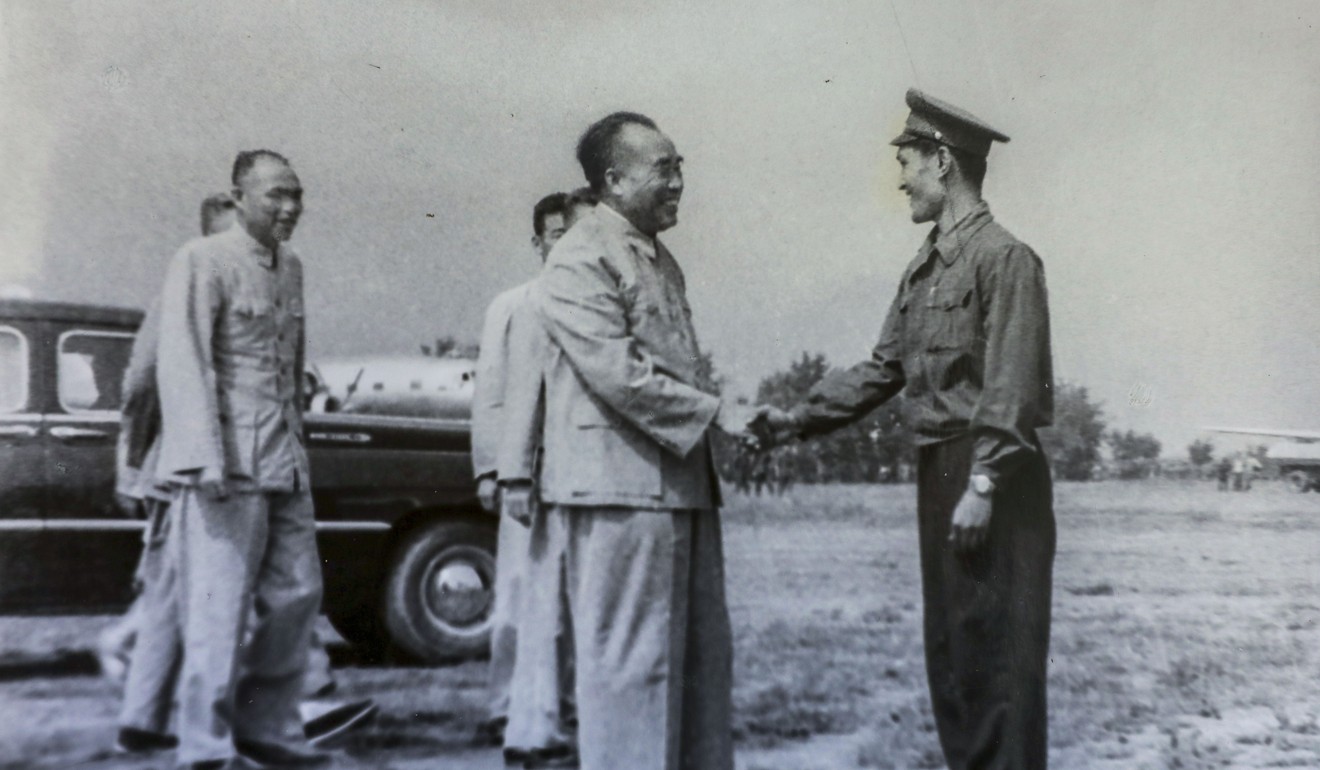
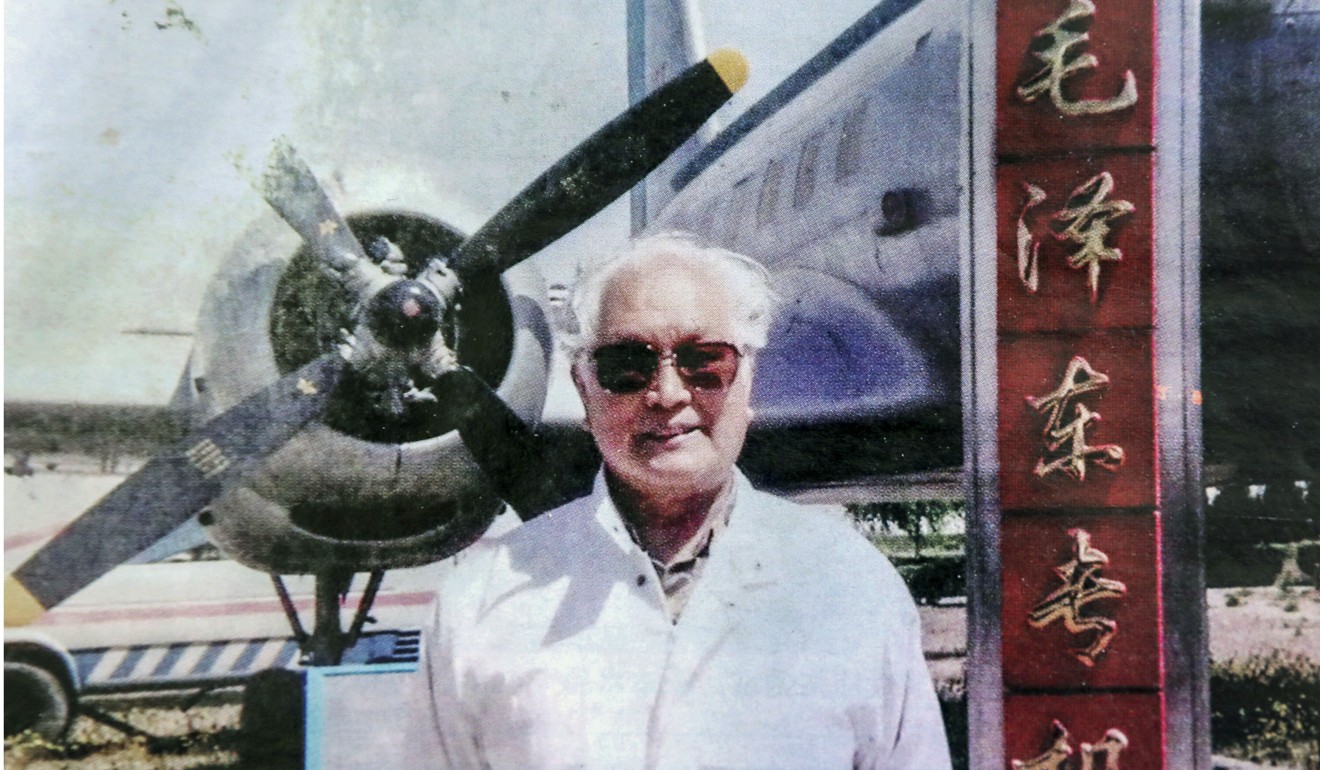
As the educated son of a wealthy Chinese merchant family, 92-year-old Cai Yanwei could easily have become a victim of Mao Zedong's decade-long Cultural Revolution. But thanks to his skill as an airman, by the time those dark days dawned in 1966, Cai had established himself as the trusted head of a team of transport pilots tasked with keeping China's most powerful leaders safe in the air.

And in his five years in the job, he learned more about Mao and other members of the ruling class, including Premier Zhou Enlai and Commander-in-chief of the People's Liberation Army (PLA) Zhu De, than most people ever would.

In an interview at his home in a retirement community in Beijing, where he lives with his wife, 13 years his junior, Cai said of Mao that for all his power and influence he was just "an ordinary person, a peasant" at heart.

"There was a bed with a soft mattress on the private jet, and all the leaders loved it, except Mao. He loved sleeping on a wooden bed, so we made one for him from five-layered plywood," he said.

"When Mao was on board, the crew would move the mattress under the bed and put the plywood on top."

Achieving such a trusted position was not always a given for Cai. Born into a Thai-Chinese family in south China's Guangdong province in April 1926, he had a turbulent childhood. At the age of five, he moved with his parents to Bangkok where they ran a hospital and pharmacy business, but was sent back to China to study when he was 13.

Although the Sino-Japanese war was raging in 1939 – the start of the second world war was only months away – Cai was enrolled at a prestigious school in one of Shanghai's foreign concessions and so was initially out of harm's way.

Still taboo in mainland China: the Cultural Revolution as seen through the lens of Li Zhensheng

That all changed in 1942 when Japanese forces overran the city and Cai, now 16, found himself homeless, isolated from his family and fighting for survival on the street.

It was later that year that he first came into contact with the Communist Party, which at the time was operating in the shadows as the civil war it was fighting against the ruling Nationalist Party was still going on but had been put on hold because of the Japanese invasion. Approached by agents who turned out to be former schoolmates offering not only food and shelter but the chance to continue his education, Cai agreed to join their ranks, albeit it on an unofficial basis.

In 1945, he headed west from Shanghai to Anhui province where he joined the New Fourth Army – nominally a cooperative force of Communist and Nationalist fighters, but very much under the control of the former.

With his strong educational background – he was encouraged to further his studies at colleges run by the Communist Party – Cai soon developed a role as tutor to his less erudite comrades, including his superiors.

The story of a martyr in Mao's China: executed and her family billed for the bullet

"During the day I took part in military training and at night I was a teacher to the commanders, many of whom were illiterate," he said. "When they learned how to write their names they were so excited."

But Cai had no real interest in teaching. What he really wanted to do was join the air force so he could take his revenge on his sworn enemy, the Japanese.

"I wanted to become a fighter pilot because I hated the Japanese who had bombed my country and killed hundreds of thousands of my countrymen," he said.

He got his chance to achieve that goal in 1946 when he was invited to join an aviation training school in northeast China's Jilin province, the first of its kind to be set up by the Communist Party.

But for all his ambition, a shortage of aircraft meant Cai was not selected for fighter pilot training and was instead assigned to learn aircraft mechanics, ironically from Japanese prisoners of war.

Despite his initial hatred of the Japanese, Cai said he and his fellow trainees got on well with their unlikely mentors, and after three years' training he qualified as a mechanic in 1948, the same year he formally became a member of the Communist Party.

Out of character? Xi Jinping has a Mao Zedong-style signature

In 1949, after declaring victory in the civil war and founding the People's Republic of China, the new Communist government was keen to boost its air force and so established six aviation schools. And three years after missing out, Cai was overjoyed to finally land a place on a pilot training course.

"This time, my instructors were Russians," he said. "And because of my knowledge of mechanics I learned fast."

By the time he qualified, the Korean war had started and he was dispatched to the China-North Korea border where he flew transport planes. His skill behind the controls was noted by his superiors, and in 1956 when Liu Yalou – the first commander of the PLA Air Force – was putting together a team of pilots to work as airborne chauffeurs for the party's top leaders, he asked Cai to sign up.

Anger over Mao Zedong lookalike at China blockchain conference

Not everyone was so keen. Many of the country's new Communist leaders found Cai's privileged upbringing objectionable and did not want him in the team. Thankfully for Cai, the boss pulled rank.

"Liu insisted on using me. He said my expertise and performance were more important than concerns about my family background," Cai said.

Such was Liu's belief in the young flier that he made him team leader in charge of 12 aircraft.

"I was really moved by Liu's trust in me and it helped build my loyalty to the party," Cai said.

"I'm convinced that it was because of my loyalty that I did not really suffer during the Cultural Revolution as no one questioned my integrity."

Marxist student leader taken away by police on anniversary of Mao's birth

While Cai's job meant he frequently saw Mao, it was not until July 1957 that the pair were formally introduced. That meeting came after Cai had successfully steered his plane through a storm while flying Mao from Beijing to the eastern city of Xuzhou.

"I'd heard there were going to be thunderstorms about an hour before we were due to take off, so I reported it to Liu," Cai said.

The commander advised Mao to change his schedule, "but he didn't listen and insisted on taking the flight", he said.

"There was heavy rain for the whole trip, and as I was approaching Xuzhou airport visibility on the ground was down to about a kilometre. I just tried to make as soft a landing as I could."

With the plane safely on the ground, Liu and Cai went to Mao's cabin to make sure he was all right.

"Mao was happy and sad," Cai said. "He said the flight was comfortable enough but he was disappointed that he couldn't see anything out of the window."

Liu took the opportunity to introduce Cai to the party chief.

"When Mao realised I was a returning Chinese, he said he'd known many others like me who'd gone back to China to join the [Communist] Red Army during the war with the Japanese," Cai said.

"He told me that overseas Chinese are very patriotic."

As well as providing him with a proud memory, Cai said the stormy flight also proved once and for all that despite widespread rumours to the contrary, Mao was not afraid of flying.

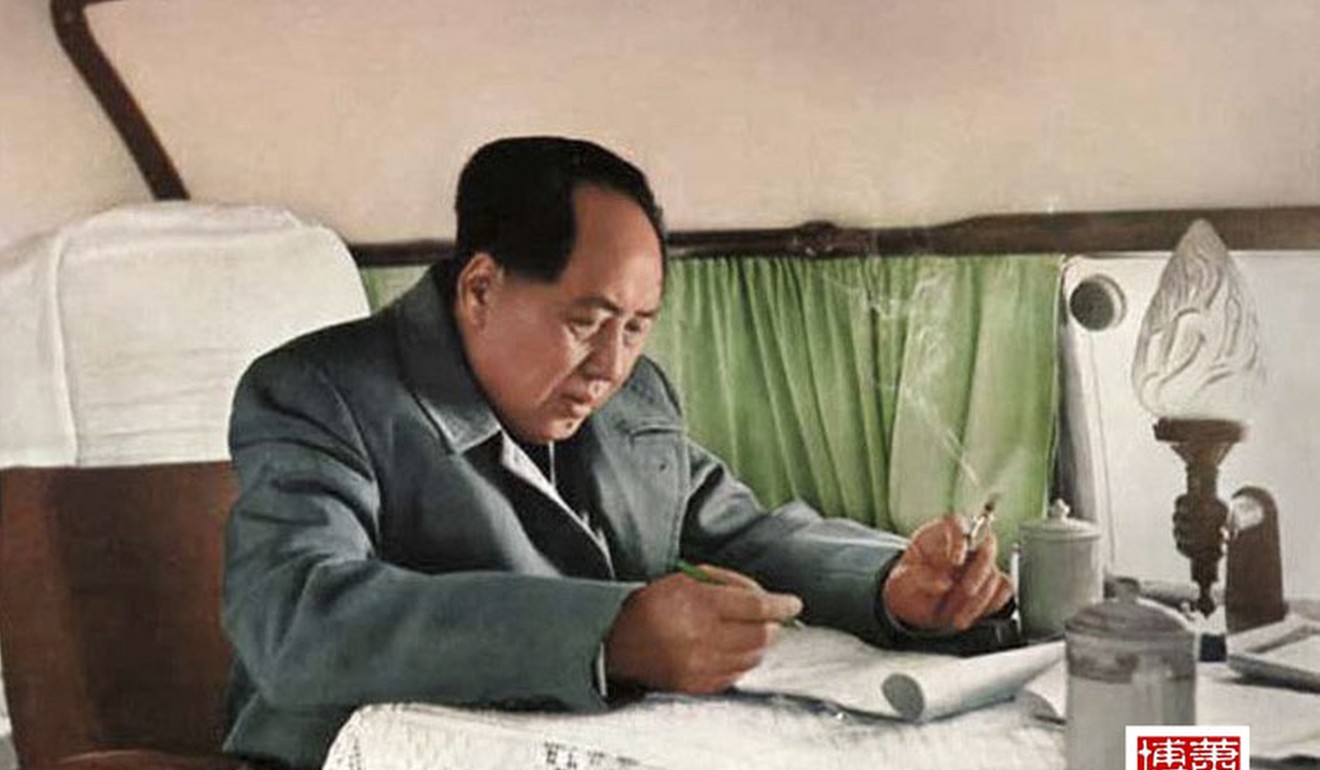
Cai is not the sort of man who likes to let such claims go unchecked. During the interview he said he wanted to set the record straight on a famous photograph taken of Mao aboard an aircraft in 1957.

According to the caption, written by Communist Party intellectual Guo Moruo: "Mao was working on the Soviet Tupolev Tu-104 Soviet airliner" during a flight to Moscow. He was the "second red sun working at 10,000 metres [33,000 feet] with tireless spirit and rarefied thinking", it said.

From Mao to Chiang Kai-shek: rare shots of 1930s China captured on film

Despite the image being a regular feature of Chinese propaganda from the late 1950s to the 1970s, the caption was totally wrong, Cai said.

"The picture was taken on a Soviet Ilyushin Il-14 while Mao was flying to Xuzhou in Jiangsu," he said. "And the aircraft was flying at a height of about 2,100 metres. Its maximum flying height is only 7,400 metres. We should explain this."

Regardless of the altitude, Mao seldom spoke to the crew, Cai said.

"Mao had about 10 secretaries and when he wasn't working, he mostly spoke to them," he said.

In contrast, Zhu was "the most friendly passenger", he said.

"Zhu and his wife were always very nice. They would chat with crew members, ask about our families and lives."

On one occasion, Zhu "even invited us to go with them to the famous Hot Spring Palace in Xian, [capital of northwest China's Shaanxi province]", Cai said, though he was quick to add that the crew were not allowed to enjoy the invigorating waters. They just stood guard, he said.

It was a similar story when Mao and the other senior officials were invited to attend balls and other entertainment events.

"We were told not to mix with the performers or dancers as we didn't know anything about their backgrounds or whether they were trustworthy in political terms," he said.

"So I would just sit near the ballroom and keep an eye out for anything suspicious."

Dances also provided Cai with another insight into Mao.

"Premier Zhou and Marshal Chen Yi were both good dancers, almost professional, but Mao and Zhu were really clumsy."

Cai's working relationship with China's ruling elite ended in 1961, but because of the close contact he had with them he was restricted from talking about and travelling overseas.

After he retired in 1983, Cai started making plans to visit Thailand to see the family he had left behind decades earlier, but he faced one hurdle after another.

It was not until 1997, 21 years after Mao's death, that he was finally granted an overseas travel permit. But it came too late.

"I spent years trying to get the permit, but when I finally returned home to Bangkok, there was no one there," he said. "They'd all died."

China Couldn’t Dominate Asia if It Wanted to - Foreign Policy

It is now widely accepted that China aspires to displace the United States as the world's sole superpower by 2049, the 100th anniversary of its modern founding. Amid a trade war and military escalations, an atmosphere many describe as "Cold War 2.0" has set in. But whatever happens between the United States and China, the outcome will not be a unipolar world, neither under American or Chinese tutelage.

The United States neither wants nor can afford to re-extend itself globally—nor do most countries want a return to American hegemony. The same applies to China. In fact, far from displacing the United States globally, it is not even likely that China will unilaterally dominate its own region of Asia.

To understand why, we need to quickly examine a pair of interrelated theoretical and historical falsehoods. A highly selective reading of the past two centuries leads many analysts to view geopolitics as a contest between the two most powerful states in the system at any given time. It is as if the planet is a frictionless table on which the United States and China alone are playing a game of Risk. But the global system as a whole bears no little resemblance to the narrow European historical template on which this power transition theory is based. Europe is composed of societies that share a small region and have common culture and religion, with each fearing conquest by a neighbor.

But to understand Asia, it makes more sense to look at Asia's geography and history. In the West, "Asia" has become shorthand for East Asia or Greater China. In reality, Asia's vast landscape stretches from the Mediterranean to the Sea of Japan, a diffuse constellation of unique civilizations centered on fertile regions such as the Tigris and Euphrates Rivers, the Indus Valley, the Gangetic Plain, the Yangtze and Yellow Rivers, and the greater Mekong region. Unlike a Risk board, Asia is not flat but extremely bumpy. The Tibetan Plateau and Himalayan Mountains, Taklamakan Desert, and other harsh terrain are among the major natural barriers to power projection across Asia.

With geographies so distant and cultures so distinct, Asia has remained multipolar for almost all of recorded history, with Mongol suzerainty in the 13th century the sole exception (for the Mongols were themselves nomadic rather than sedentary people). Rather than seeking far-reaching conquest, Asians' attitude has generally been to live and let live. Over centuries of Silk Road interaction, commerce and cultural exchange are far more the norm than conquest. Even the Mongols ruled by way of adopting local religions and languages. A proper appraisal of Asian geography and history thus reminds us that Asia is not a set of dominoes that will fall before an expansionist China. China may be as nationalistic as ever, but the Chinese are not the new Mongols.

Understanding the patterns of centuries past helps us forecast the evolution of China's Belt and Road Initiative, which President Xi Jinping himself proclaimed as "the project of the century" at its first convening in 2017. Even though the Belt and Road Initiative is an informal coalition with the sensible aim of coordinating trillions of dollars of desperately needed infrastructure investment across more than 60 countries, a narrative has taken hold in Washington that Belt and Road is a nefarious plot aimed at neocolonial hegemony through debt traps that result in militarized extraterritorial ports and control over foreign economies. Reality veers between both versions of this story. Importantly, consistent with Asian history, China alone does not determine the outcome as much as the rest of Asia's powers, which have thus far been neglected in geopolitical conversations.

For those uninitiated in China's nearly three decades of sustained infrastructure investment in its periphery dating to the collapse of the Soviet Union, China's grand strategic motivation for the Belt and Road Initiative is as much defensive as offensive. Over this period, China has become the world's largest commodities importer as well as largest exporter of finished goods, heightening its exposure to the so-called Malacca trap by which its physical trade depends on the narrow chokepoint of the Strait of Malacca passing between Singapore and Indonesia over which it has no control. Its aggressive maneuvers in the South China Sea are an effort to at least secure the waters on the eastern side of the strait, as it cannot control the Indian Ocean—which Belt and Road projects in Myanmar, Bangladesh, and Pakistan are meant to enable overland access to. And as China's trade rapidly expands with the European Union (with whom China trades $500 billion more per year than it does with the United States) and the Arab world, it's only logical that it would seek overland corridors toward Europe and the Gulf region of West Asia, too.

However, commentators who portray China as having a thousand-year vision and presume an unwavering path to its achievement both overstate China's wisdom and underestimate that of its neighbors, who have thousands of years of historical engagement with China. China today seems an unstoppable force—but Asia is full of immovable objects in the form of civilizational states such as Russia, Iran, and India, whose ancient histories allow them to stand up to China whenever it suits their interest to do so. China dares not trespass on Russian soil even as the two increasingly coordinate their military exercises, and Iran has shown little remorse in canceling Chinese oil contracts despite its dependence on China to withstand Western sanctions. The 2017 Doklam Plateau standoff between India and China was similarly instructive, for it was China that blinked first, withdrawing its army and suspending some of its controversial road construction activities in disputed Himalayan terrain. China is known to play the long game—now so, too, is everyone else.

China bears the additional burden of having to juggle a bewilderingly complex 360 degree array of neighbors all at the same time. China shares borders with 14 countries, a reminder that throughout history, it has far more often been invaded than been the invader. China has not been immune to defeat at the hands of Arabs, Turks, Japanese, and Europeans, and been forced to stalemate by Russia and Vietnam. Today it is all too keenly aware that even if its high-tech but untested and inexperienced military were to swiftly defeat a neighbor, the cost in terms of diplomatic blowback from other neighbors would be severe.

This is a reminder that even with all of China's investments in military modernization, there it is little reason to believe it will purchase any more political leverage beyond its immediate periphery than America's mighty forces have in Iraq and Afghanistan. From the South China Sea to the Indian Ocean, China's naval footholds, access points, and probing have awakened multidirectional countermeasures in the form of new coalitions such as the Quad (made up of the United States, Japan, India, and Australia) and smaller powers they now back such as Vietnam and Indonesia. Littoral powers are thus crowding in across the Indo-Pacific to make clear that none should dominate. Even if China builds the modern military equivalent of the its fabled 15th-century Treasure Fleet, it will never dominate maritime Asia. A much talked about restoration of the Ming-Qing tributary system is not Asia's most likely scenario.

In defiance of superficial colonial analogies used to describe China's behavior, today's world features deterrence and sovereignty, democracy and transparency, instruments and forces that severely restrict China's ability to dictate affairs. Consider again the Indian Ocean, where China has made significant commercial and diplomatic inroads from Sri Lanka and the Maldives to Pakistan and Kenya. In Sri Lanka, a near-default situation led to China taking control of the Hambantota Port that China itself built on a 99-year lease. The issue has become so central to the country's politics that no leader, not even Chinese-backed former Prime Minister Mahinda Rajapaksa—now opposition leader after a failed attempt to unconstitutionally depose the government in December—could conceivably bow any further to China if he eventually returns to power.

The same is true in the Maldives and Pakistan, which has actively scaled back by half the value of projects associated with the China-Pakistan Economic Corridor. The new government of Imran Khan ran on a campaign of learning from China's development, not mortgaging its future to China. In Kenya, President Uhuru Kenyatta has also praised the China model, but this past December he had to actively combat a rumor that his government had taken on so much debt from China that it would have to give up ownership of Mombasa's port. Public opinion, media scrutiny, and democratic politics were not features of the European colonial world. Today, they are an effective bulwark against excessive foreign influence, either overt or covert.

Geopolitics is nonlinear. The Hambantota scandal in Sri Lanka has been portrayed by the "China threat" school as the first of many debt-for-equity swaps to come. Instead, it was an immediate wake-up call for even the poorest and most corrupt states dealing with China to use legal and commercial tools to better manage their China exposure to avoid becoming the next Sri Lanka. Much as China has exercised caution in militarily overstepping terrestrial borders, so too has it accepted numerous unilateral debt write-downs and contract terminations in Nepal, Myanmar, and Malaysia. Though all are relatively weak, China fears the backlash that would ensue if it does not show generosity toward them. Unlike in colonial times, even poor client states can effectively say no.

Thanks to modern sovereignty, China is being forced to learn in three years of Belt and Road what European empires took 300 years to accept. What China's behavior does have in common with analogies to the British East India Company and imperial history generally is that by investing in and elevating their colonies, empires actually empower the very forces that resist them. The British united India, built its railways, and gave it the English language and a vast administrative apparatus—all of which proved very useful in eventually ending British rule. This cycle, not eternal hegemony, is the reliable pattern of history.

Furthermore, today's world is neither unipolar nor bipolar but a geopolitical marketplace of powers competing to provide services to potential allies and partners. China is therefore not the only option—especially after the first phase of Belt and Road investments. Some credit is due to China for catalyzing a worldwide recognition of the importance of infrastructure finance, particularly in a post-financial crisis world in which some Western leaders wrongly preached austerity rather than stimulus. Furthermore, there is no question that greater trade with and investment from China has contributed to Pakistan, Ethiopia, Uzbekistan, Myanmar, and other former basket case economies now delivering among the world's fastest growth rates. (Chinese companies even invest nearly twice as much in rival India as in client Pakistan.)

The more this growth helps smaller countries achieve sovereign credit ratings and visibility among investors, the more they can issue bonds bought by an international array of public and private creditors and attract foreign direct investment from beyond China, eventually diluting China's economic sway. Today most Asian countries are wisely using China to get themselves on the map, and if they play their cards right, they may well hand the next set of contracts to Indians, Turks, or Germans. Remember that China's popularity is often lowest where it invests the most. It is precisely in Mongolia, Kazakhstan, and Myanmar where one hears the acronym "ABC": anyone but China. China's largesse has made it the going concern across Asia, but it is also learning that Asia can't be bought.

China has had first-mover advantage in many Belt and Road member countries that had fallen off the post-Cold War map, but it is too soon to predict the outcome of Beijing's overtures in any of them. Chinese diplomats and businesspeople often learn languages but not anthropology; the observe national conditions but don't embed in local cultures. In some countries, they buy allies; in others, debts are renegotiated; elsewhere, there is backlash. All three can occur at the same time, and China doesn't know or control the outcome in any country. If the United States, Europe, Japan, India, and other powers don't want to see the developing world fall into Chinese debt traps, they simply have to put their money where their mouth is.

Indeed, China has inspired an infrastructure arms race across Asia by which many countries and institutions including Japan, the Asian Development Bank, the World Bank, and the new U.S. International Finance and Development Corporation are competing to expand their lending and investment portfolios in strategic and fast-growing Asian nations. Unlike in a traditional arms race, however, in an infrastructure arms race efforts are more complementary than conflictual. Rather than competing with the new Asian Infrastructure Investment Bank, existing multilateral bodies are co-investing with it, resulting in reduced lending rates as well as more diversified and higher-quality projects.

The more the Belt and Road Initiative becomes a multilateral exercise, the more it connects not just Asian countries to China but also all Asians to each other. From Russia and Turkey to Iran and Iran to Myanmar and Thailand, the resurrection of multidirectional Silk Roads with no dominant power symbolizes the return of Asia's past, one characterized by deference, not dominance. Asia has nearly 5 billion people, about 3.5 billion of whom are not Chinese. Asians aspire to live in an Asian world order, not a Chinese one. The Belt and Road Initiative will thus not play out like a Chinese steamroller flattening its way across Eurasia. Rather, it will resemble a tug-of-war over lucrative infrastructure projects and trade routes. Tug-of-war is an arduous contest, featuring many heaves and hos, backs and forths. Like Asian history itself, it is an interminable "great game" full of shifts in momentum and requiring great patience. The very reason the great game continues to this day is that Asia is ultimately too big a field for any single power to control.

This essay is adapted from Parag Khanna's forthcoming book, The Future is Asian: Commerce, Conflict, and Culture in the 21st Century.

Super Bowl: Donald Trump tips New England Patriots to beat LA Rams - The Independent

US president Donald Trump has tipped the New England Patriots to beat the Los Angeles Rams in the Super Bowl on Monday night. 

Trump, reeling from a series of political defeats and facing increasing pressure from the Mueller probe, gave an interview to CBS ahead of the network's coverage of the NFL's annual showpiece event. 

The owners of both Super Bowl participants, Robert Kraft of the Patriots and Stan Kroenke of the Rams, both donated generously to Trump's presidential campaign but the 45th president of the United States prioritised his long-time personal friendship with Kraft when making his prediction. 

"They have a very special owner and coach, and certainly they have, I guess, the greatest quarterback of all time," Trump said in an interview with 'Face the Nation', referring to Kraft, coach Bill Belichick and quarterback Tom Brady, respectively.

"So I would say they would win," he added. "As the expression goes, who knows. I hope it's a great game."

Watch more

Trump will watch Sunday night's game from a party at his Mar-a-Lago resort in Florida.

The Patriots were the first professional sports team to visit Trump at the White House after the team won the Super Bowl in 2017.

"People love to come to the White House," Trump said in Sunday's interview. "So the Patriots were here two years ago, and I'm sure they'll be back."

Last year's winners the Philadelphia Eagles infamously had their invitation to the Oval Office withdrawn after a number of players made it cleaer they would not attend. The Golden State Warriors similarly decided against attending after winning the NBA Championship Finals last year.

Follow the Super Bowl LIVE with Independent Sport

Keep up to date with all the latest news with expert comment and analysis from our award-winning writers

Fear And Loathing In Russia's Dying 'Las Vegas' - RadioFreeEurope/RadioLiberty

SHABELSKOYE, Russia -- For several years, things were looking up for Viktoria Mityushkina and her family in this southern village on the shores of the Azov Sea -- mainly thanks to the gamblers flocking to the barren steppe just up the road.

Mityushkina, 37, worked for one of the three casinos at Azov-City, which opened in 2010 under a Kremlin initiative to establish a handful of Las Vegas-style hubs for gambling while banning it everywhere else.

The stated aim of the move, which eliminated casinos and slot halls that sprouted up seemingly everywhere in Russia following the Soviet collapse, was in part to inject economic life into far-flung, underdeveloped regions.

"I became the chef's assistant for the buffet, worked with clients, cooked for them at a live station," the mother of two told RFE/RL's Russian Service in a recent interview.

Mityushkina's husband stayed home with the children while she worked. Men in this town in Russia's Krasnodar region often leave for itinerant work to pay the bills. But Mityushkina didn't want the family separated, and she earned enough at the casino to support them.

Viktoria Mityushkina was able to support her family working as a chef.

But the whims of officials and powerful business interests have now pummeled Mityushkina's employment prospects -- and those of an estimated 2,500 others in the area who relied on the local gambling industry for their livelihood.

Russian Prime Minister Dmitry Medvedev in October sounded the final death knell for Azov-City, ordering it to be liquidated as one of Russia's designated gambling zones by December 31, 2018.

The move was not entirely unexpected. In January 2014, the CEO of state-owned lender Sberbank, German Gref, had proposed establishing a gambling zone in a ritzier area of Krasnodar -- the Black Sea resort of Sochi, which hosted the Winter Olympics the following month.

While Russian President Vladimir Putin initially voiced his opposition to bringing gambling to Sochi, saying it would hurt the city's "family atmosphere," he proceeded to sign a July 2014 law paving the way for casinos in the Olympic town.

Under Putin's original gambling law, no region could have more than one designated gambling zone. And in May 2016, he signed a law liquidating Azov-City as of January 1, 2019.

Government officials said gambling in Sochi would help state creditors and private investors recoup the money they poured into the resort town for the Winter Olympics, Putin's pet project that was plagued by cost overruns and allegations of corruption and cronyism.

In August 2016, Medvedev issued a decree ordering the establishment of a 165,000-square-meter gambling zone in Sochi.

A view of the Sochi casino in the Krasnaya Polyana gambling area

Despite the ban on more than one gambling zone in a single region, Putin had made allowances for Azov-City to continue working until its ordered closure. Casino owners there -- and locals -- had hoped that officials would ultimately let them stay in business for good.

"We didn't look for work beforehand, because even our managers didn't believe that they would close the casino," Mityushkina told RFE/RL.

Those hopes proved to be in vain. On December 29, Azov-City was officially shuttered.

"When I found out that they were likely going to shut us down, I simply burst into tears," Mityushkina said. "It was a tragedy for me. Two children, and neither I nor my husband have jobs."

'Hit The Jackpot'

The rise of Azov-City began in 2006, when Putin pushed through the law banning gambling nationwide aside from special gambling zones to be set up in the far-eastern Primorye region, the Altai Republic in Siberia, the western exclave of Kaliningrad, Krasnodar, and the Rostov region, whose permission was later revoked. (In 2014, Putin added Crimea, the Russian-occupied Ukrainian peninsula, to the list.)

Putin painted the move as a means of bolstering budgets of economically struggling regions while protecting citizens from the dangers of gambling, including retirees who "lose their last kopeks, their last pension" to jackpot fever.

The ban on gambling beyond the new zones took effect in July 2009 as the authorities shuttered slot halls and casinos, including the flashy, high-rolling haunts of central Moscow. Plans for Azov-City were already humming along.

"Today we see that the government has created all the necessary conditions for successful business," then-Krasnodar Governor Aleksandr Tkachyov said while attending a presentation of the infrastructure established to service Azov-City. "Soon investors and gamblers will come here, and each will have a chance to hit the jackpot," the Kommersant newspaper quoted him as saying a day after the ban went into effect.

The first casino at Azov-City -- the Oracle -- was up and running six months later. The locals preferred the slot machines, while higher-rolling city folk from Krasnodar and Rostov-on-Don played roulette and cards.

Built on vacant land 1 kilometer from the seashore -- and located hours away by car from the nearest major cities -- Azov-City wasn't exactly Monte Carlo. Ultimately, just three casinos -- including the nine-story Shambala -- were built at the site, and investment ground to a halt over the project's uncertain future. Residents in the string of villages near the complex, however, benefited greatly not only from the jobs, but also from the estimated 1 billion rubles ($15.2 million) the regional government spent on roads, gas, and electricity for the project.

"They built everything from scratch, on an empty field," said Anna, a Shabelskoye resident who says she worked at Azov-City until its final day.

Ultimately, just three casinos -- including the nine-story Shambala -- were built at Azov-City.

Anna, like several other locals, spoke to RFE/RL on condition of anonymity due to fears that publicity could hurt their job prospects. She said she worked for six years as a senior cook at one of the casinos but is now unemployed.

"They invested huge amounts of money in our district, the casinos brought in stable proceeds -- how could someone just close it down after everything was built and working? No one believed in such nonsense," Anna said.

The head of Krasnodar's Shcherbinsky district, where Azov-City was located, said last year that the district's consolidated budget totaled more than 1 billion rubles ($15.2 million) at the end of 2017, mainly thanks to gambling-related taxes. That, he said, was up from 600 million rubles in 2010 ($9.1 million under the current exchange rate, but $19.6 million at the time).

"Azov-City provides work to 2,500 local residents. I don't know a single major employer in the north of [Krasnodar] that could provide so many jobs," Sergei Tsirulnik told Kommersant in August.

Murky Ownership

Opponents of the push to close Azov-City argued that there was no reason it could not coexist alongside Sochi gambling establishments -- other than the statute forbidding more than one gambling zone in a single region.

"Both platforms have their own clientele, don't compete with one another, and together deliver considerable proceeds to the state budget," Maksim Smolentsev, the CEO of one of the two companies that operated casinos at Azov-City, wrote in an August 2017 Facebook post.

Azov-City attracted primarily locals or visitors from nearby cities within several hours' drive. Since the January 2017 opening of its first casino, the Sochi gambling zone, known as Krasnaya Polyana, has been visited by more than 850,000 people from 146 countries, according to the lone casino operator currently working there.

Krasnodar authorities say gambling in Sochi brought in 291 million rubles ($4.1 million) in tax revenue for the regional budget last year. In 2018, a total of 570,547 people visited Sochi gambling establishments, while 483,046 visited Azov-City's, according to official data.

The interior of the newly opened casino Oracle in Azov-City in November 2014

Smolentsev, who has filed a 3 billion-ruble ($45.7 million) lawsuit against regional authorities to recoup some of his company's losses, has said the decision to launch the Krasnaya Polyana gambling zone "looks like lobbying by private investors at the expense of the government."

The ownership of two key entities involved in the Sochi gambling zone remains opaque. The only casino owner currently operating there is a Russian firm called Domein, whose ownership chain runs through offshore firms beginning in Singapore and leading to Cyprus. Available corporate records in both countries do not indicate the ultimate beneficiary.

The Russian company Kurort Plyus, which owns the all-season resort where two of Sochi's three casinos are located, is owned by another Russian firm, Biznes Kurort, that is wholly owned by a Cypriot-registered firm called Casterton Holding Limited. Records from the Cyprus corporate registry do not indicate Casterton's ultimate beneficiary.

Kurort Plyus was established in September 2015, just weeks before Sberbank auctioned off a company that owned the resort, known as Gorky Gorod. It was the only participant in the auction, agreeing to buy 96.9 percent ownership in the asset for Sberbank's starting price of 35 billion rubles ($533 million). The doors opened for gambling in Sochi 14 months after the auction.

An inquiry sent to an e-mail address associated with Kurort Plyus about the firm's ownership went unanswered as of publication time.

After Kurort Plyus's acquisition of the resort, the Russian version of Forbes Magazine quoted two unidentified "federal officials" and "two sources familiar with the details of the deal" as saying the company was close to Tkachyov, who while serving as Krasnodar governor had predicted in 2009 that investors and gamblers would flock to Azov-City to hit the "jackpot."

Tkachyov, who was serving as Russia's agriculture minister when Kurort Plyus won the auction, has not publicly commented on those purported links. The agricultural holding for which Tkachyov currently serves as board chairman did not respond to RFE/RL's request for comment on whether he or his relatives have links to companies active in Sochi's gambling industry.

Agriculture Minister Aleksandr Tkachev visits the Olympic Park in Sochi in May 2016.

'Nowheresville'

Much of the employment that Azov-City generated wasn't related to dealing cards or dishing out buffet fare at the casinos. The improved financial fortunes of many locals were built on the ancillary economy that rose around the complex.

Inna, a resident of the nearby village of Molchanovka, had previously worked at a youth camp that provided a stable income until it closed after Azov-City was built. Scrambling to make ends meet, she and her family opened a village store in 2012 and a hotel two years later, both of which catered to Azov-City visitors.

"When they closed the casinos, the girls -- waitstaff and managers -- gathered here in the store, said their goodbyes, and cried," Inna, who asked that her last name not be published, told RFE/RL.

Inna: "It's nowheresville, and there's no work,"

Inna lives with her husband, their two children, and her elderly mother in Molchanovka, a village with an official population of 38 people. She and her husband now drive regularly to the town of Shcherbinovsky (population: 1,738) an hour away in search of odd jobs.

Since the casinos closed, Inna said, "absolutely nothing is going on" in Molchanovka.

"It's nowheresville, and there's no work," she said. "The people who indirectly depended on the gambling zone won't get any compensation. A person opened a hotel or a store, or sold honey to visitors. If there are no more clients for the casinos, there aren't any for us either."

Another area resident whose client base has largely disappeared is Igor Chernyshov, a 43-year-old taxi driver from Shabelskoye who says he spent the past eight years ferrying gamblers to and from Azov-City.

Chernyshov, who says his wife and daughter had casino jobs, now picks up fares primarily from friends and acquaintances traveling between villages with little or no public transport.

On a recent afternoon behind the wheel of his car, Chernyshov drove past the shuttered Azov-City complex and looked out over a snow-covered field.

"This used to be farm country, there was work," he said. "Farms, fish farms, canneries. And everything closed. Where should the young people from the casino go to work now? To the collective farm? That was closed, too. There used to be more than 1,000 jobs there, and now there's just a small private collective farm with 50."

Back in Shabelskoye, a town of more than 2,000 people located 17 kilometers from Azov-City, the locals can walk down the street and point out the homes where former casino employees live. They say every third home is occupied by someone whose work was connected to the gambling zone.

Several small grocery stores, as well as a housewares shop and a hair salon, populate the town's central square. Newly built brick homes line the small roads leading to the seashore. The locals became accustomed to steady incomes during Azov-City's eight-year lifespan, taking out mortgages and consumer loans. Now many face potentially crippling debt.

Viktoria Mityushkina, the mother of two who worked as a chef at a casino restaurant, told RFE/RL that she and her family would like to move from Shabelskoye. But they built their home using a federal subsidy for mothers that dictates strict conditions under which it can be sold.

"There are dozens of other homes like that here," Mityushkina said. "It's simply a disaster for the villages. What happens next? People just drink themselves to death?

Yekaterina Pogudina of RFE/RL's Russian Service reported from Shabelskoye; with reporting by Carl Schreck in Prague

In FX’s Latest War With Netflix, Who’s Right and Who’s Wrong? - Vulture

FX Networks boss John  Landgraf.

FX Networks boss John Landgraf. Photo: David Buchan/Variety/Shutterstock

FX Networks chief John Landgraf is once again lashing out at Netflix, this time taking issue with the streaming giant's decision to self-report viewership numbers for a handful of titles, including Sex Education and You. Appearing in front of journalists at the TV Critics Association winter press tour in Pasadena on Monday, Landgraf accused Netflix of both misrepresenting the actual audience for its shows and creating a false impression of how its programming slate is performing with its subscribers. "When applying industry standard, accepted metrics to all their programming, the list of shows on their platform that would be considered commercial failures is long, and their true batting average would be viewed as unimpressive," the exec argued. It was a stunningly direct attack, even for a longtime Netflix skeptic such as Landgraf.

Landgraf's latest charge was sparked by Netflix's decision last month to pepper its fourth-quarter earnings letter to shareholders with some carefully selected data points about recent programs. Breaking from its usual custom of not disclosing specific numbers about how its shows perform, the streamer told shareholders (and thus the world at large) that its recently acquired Lifetime drama You and its new dramedy Sex Education were on track to be seen in 40 million member homes within their first month on the service. "The numbers look really big and provoke the notion that many shows on their platform are gigantic hits that are watched more than the shows on broadcast or basic cable," Landgraf said. "However, if you dig a little deeper, Netflix is not telling you the whole story because the numbers they issue do not follow the universally understood television metric … which is average audience. Anyone who's read Netflix's statement about You would likely assume they were giving an average audience number because that is how scripted television has always been measured. They would simply think, Forty million households are watching You? Wow, I better check that out. It must be the biggest hit on TV."

It is not wrong of Landgraf to take issue with the idea that 40 million people — or even 40 million homes — have watched all of season one of You on Netflix. He is also 100 percent correct to note that Netflix's data and Nielsen ratings are two very different measurements and shouldn't be used to compare shows. Landgraf is similarly right to suspect that Netflix puts out numbers that paint its shows in the best possible light, because of course they do. (As Landgraf himself noted Monday, "Networks have been touting their successes forever," while working equally hard to play down their failures.) Netflix absolutely benefits from the perception that it has a ton of must-watch shows: It drives folks to sign up for the service and helps convince current subscribers to stay. And as others have noted, Netflix also wants creators and actors to know that people are watching Netflix shows because, as important as money is to creative talent, knowing their work is being seen is not an insignificant motivation for what they do for a living.

But Landgraf's case gets weaker when he all but accuses Netflix of being a con artist deliberately trying to mislead the media, and, by extension, everyone else. Consider how he characterized Netflix's release of the numbers for You and Sex Education. After accurately quoting Netflix's shareholder letter announcing the 40 million figure for You, Landgraf made it seem as if the streamer was trying to pull a fast one on reporters and shareholders: "Subsequently, Netflix clarified the statement by adding that their watch time meant that an individual Netflix account watched at least 70 percent of one of You's ten episodes," he told reporters. A Netflix rep declined to comment on Landgraf's charges, but in fact, Netflix offered that important qualifier in the very same shareholder letter in which it revealed its 40 million number.

Further, even as Landgraf accurately noted that the "ratings" released by Netflix are not comparable with the Nielsen numbers regularly reported on by American media outlets (including Vulture), he then threw out his own set of misleading numbers. Citing Nielsen's Subscription Video on Demand Content Ratings, the FX chief claimed that the average U.S. audience for You on Netflix was closer to 8 million viewers during its first month, while Sex Education had just over 3 million viewers in the States. While Nielsen is obviously a reputable and respectable company — it's long been the gold standard for audience measurement in the U.S. — its SVOD ratings simply aren't comparable to its linear TV numbers. They don't count the not-insignificant number of Netflix members who stream via mobile devices or on their computers, and more importantly, they only measure American viewers. Netflix has more international subscribers than domestic, making any measurement that counts only U.S. eyeballs inherently incomplete. To be sure, Landgraf did specifically say "U.S. viewers" when citing the Nielsen Netflix numbers. But it's pretty ironic that after accusing Netflix of trying to confuse shareholders and the media with misleading data, Landgraf arguably did the same thing on Monday. The result: Multiple industry trade publications and at least one major daily newspaper reported the 8 million and 3 million figures thrown out by Landgraf without noting that those figures don't include non-U.S. viewers.

Look, when Netflix characterizes the You audience by saying the show "will be watched by 40 million member households," it's definitely not telling the whole truth about a show's actual performance. But it's also not engaging in unprecedented smoke-and-mirrors shenanigans, as Landgraf suggests. Instead, Netflix is offering the sort of bumper-sticker distillation networks use all the time to hype their performance. Just yesterday, CBS put out a press release noting that 149 million people had seen "all or part" of the Super Bowl, even though its average audience (also reported by the network in its release) was just over 100 million. Shady? Maybe! But networks use that bigger number because it gets across the message that lots of people are engaging with and sampling a show. Similarly, Netflix's grossly simplified numbers, as Vulture reported when they were first released, are "best understood as a reflection of whether a show is getting sampled vs. being enthusiastically consumed." The fact that Netflix doesn't spell this out in bold letters clearly irks Landgraf, and that's understandable. The streamer is never going to win any awards for data transparency, and Landgraf is right to note that Netflix benefits from casual observers when comparing its 40 million figure with numbers that get reported by Nielsen. Landgraf benefited from the same dynamic Monday when he tossed out his glass-half-empty assessment of the audiences for You and Sex Education.

But it's not Netflix's job to convey nuance and context when reporting its audience statistics. That's the job of journalists. And much (though not all) of the reporting last month on Netflix's sudden data dump did put those stats into proper context, often including a healthy dose of skepticism about them. As much as Landgraf would like to make it seem as if Netflix's PR spin goes unchallenged, there's been lots of good reporting in major publications that relayed the data Netflix offered with the proper big-picture perspective. Less praiseworthy: the flood of headlines and tweets that reduced the information Netflix released to "40 million people watched You on Netflix." But this is a problem that applies across the board these days, not just with Netflix. Likewise, those of us who cover TV need to avoid playing into the narrative that just because a show is successful for Netflix doesn't mean it's some sort of massive game changer that represents a new paradigm for the TV industry. The Big Bang Theory gets over 17 million viewers every week, but you don't see a hundred stories about how CBS is reinventing TV comedy each time Nielsen releases numbers for the show.

As part of his latest Netflix sermon, Landgraf also got worked up about the perception that Netflix is some sort of hit factory. Because it keeps most of its audience data locked away from public view, he argued, Netflix creates an illusion of success it doesn't deserve. While a show like Stranger Things is a legit success, "Netflix has also made and launched a multitude of consumer failures," the FX boss said. "But by … failing to ever report a single strikeout, they undercut an accurate perception of their batting average and misrepresent the number and scale of their hits. And that perhaps is the point. By creating a myth that they've used data to find the magic bullet — guaranteed commercial success — that has eluded everyone else since the creation of television, they've given the impression that the vast majority of shows on their platform are working."

Landgraf is right that Netflix has not released audience numbers for its unsuccessful shows. One of the advantages for showrunners who bring their wares to a streaming service is that there's no daily report card, no embarrassing stories about a series generating a "record low rating." (Megaproducer Ryan Murphy, who's made some of FX's biggest shows, cited this as one of the reasons he defected to the streamer in 2018: "It's been a daily death having to get up in the morning and get your daily report card that you know is a lie," he told me last year.) But it seems myopic at best — and disingenuous at worst — to argue that Netflix doesn't report its failures. Every time it cancels a show after one season, Netflix is admitting that it launched a flop. When the service canceled Michelle Wolf and Joel McHale's talk shows on the same day, it endured a social-media backlash for days, and a round of stories questioning its decision to get into the weekly talk-show game.

No doubt Netflix renews plenty of programs that don't get "big" audience tune-in, but Landgraf shouldn't be complaining about this, either. He knows full well that Netflix's business model isn't about aggregating the most number of eyeballs for individual shows, but rather adding and retaining subscribers and driving more hours of overall viewing. Similarly, FX Networks has long supported shows with so-so ratings (from The Americans to You're the Worst) because, in addition to ad revenue, it relies on getting cable operators to pay it more in subscriber fees. The more FX and FXX have been seen as among the best networks on TV, the more they've been able to charge cable companies. Netflix benefits from the same sort of virtuous cycle. It's no doubt annoying to Landgraf that a number of Netflix shows with middling or even small audiences get labeled as "hits" by reporters simply because they keep getting renewed or get a lot of tweets. But there are folks at NBC who no doubt chafe every time The Good Place is called a "low-rated comedy" while FX's Atlanta — with a substantially smaller audience — is painted as a hit.

To be clear, much of what Landgraf said to reporters on Monday was rooted in legitimate grievances. Netflix does get treated differently than traditional linear networks and benefits greatly from being able to hide basic facts about how its content is consumed by audiences. As someone who's been covering TV ratings for 25 years, I would love nothing more than to know exactly how Netflix subscribers watch (or don't watch) particular shows. But Netflix's ability to make a whole bunch of good-to-great shows available to hundreds of millions of people at a reasonable price without the tyranny of overnight ratings is a good thing for consumers and creatives. And while Landgraf — one of the most intelligent and thoughtful execs in Hollywood — is rightly concerned about Netflix getting too big and having too much control over what audiences see, the way to counter that very real problem is not to insist on exposing the streamer's hidden ratings data. It's for other big media companies to invest heavily in creating their own streaming rivals to Netflix. Landgraf is aware of this, of course. Once Disney completes its purchase of 21st Century Fox, FX will become a part of Disney, which later this year will launch a new streaming service designed to take on Netflix directly. Here's a prediction: That new service won't release much ratings information, either.