True romance? The intriguing tale of the Russian agent and her Republican lover - The Guardian

Most romances don't end in indictment – but then again, the relationship between Maria Butina and Paul Erickson isn't like most romances.

If anything, the love story between a gun-loving Russian covert agent and a conservative activist-cum-alleged fraudster, reads like a Coen brothers movie. There's the intrigue of a legal thriller (Bridge of Spies), the self-defeating scheming of a crime drama (Fargo), the excess of a cult classic (The Big Lebowski), and even a bit of romance (just about everything, really, ever).

But Butina will be in no mood for plot twists when she appears in court on Thursday for what she hopes will be the last hearing in a saga that has had her sitting in solitary confinement since her arrest in Washington last summer, and on FBI watchlists for years.

She stands accused of acting as an undercover influence agent for Russia and exploiting personal connections, as part of a larger Kremlin-backed plan to infiltrate influential conservative groups, most notably the National Rifle Association, and steer American politics in Moscow's direction, according to a criminal complaint.

Butina was arrested last July, the same month that Robert Mueller indicted a dozen other alleged Kremlin-linked intelligence agents in Russia for hacking Democratic computers in 2016. But the story of how she leveraged her connection to a black-sheep GOP operative with a history of taking on questionable causes, certainly sets the story apart.

For one thing, it's a love story – "a classic love story" – to hear her lawyer tell it.

Whatever the truth of their connection, her relationship with the Republican operative nearly twice her age – with a speckled past that ranged from work as an 80s anti-communist film producer, a spokesman for John Wayne Bobbitt and lobbyist for a notorious African dictator, to a trail of lawsuits for reportedly misleading investors and failing to repay loans – separates the case from other investigations into Russian meddling in American politics.

Even if special counsel Robert Mueller found no collusion between Trump and Russia, here at least is one small example of collusion of the most intimate sort.

And it's one that offers a window into a mess of complicated relationships between Kremlin-connected officials and America's conservative elite, or at least elite-adjacent.

Butina's playbook mixed the political with the personal. It's also something that Butina excelled at – or was thought to excel at until last 15 July, when she opened the door of her DC apartment and was surrounded by FBI agents in bulletproof vests.

Paul's an ultimate conman – he'd rather steal a buck from somebody than work hard enough to earn two bucks

Lee Schoenbeck

Now, after pleading guilty to conspiracy, Butina is poised to find out whether she'll get as much as five years in jail or go free practically immediately. "If she got the time-served sentence, she would be heading back to Russia soon after," her lawyer Robert Driscoll told the Guardian.

Meanwhile, it appears the legal trouble is just beginning for Erickson, who was indicted last month in his home state of South Dakota on 11 counts of fraud and money laundering. The charges stem from an assisted living-related business scheme, with activities stretching from 1996 to August of 2018, and include the notable claim that Erickson scammed investors regarding fallacious development of a wheelchair to help people access a toilet with greater ease.

Erickson pleaded not guilty to all counts last month in the fraud case. Meanwhile, he is also reported to be a target in the Butina case, although he has yet to face any charges there.

Recently his imprisoned paramour has begun cooperating with officials, and their visits have become more sparse, according to someone familiar with their relationship. So even more trouble could be on the way.

Embed

Loving Maria Butina wasn't always so fraught for Paul Erickson.

The woman he fell for was raised in the rugged mountain region of southern Siberia known as Altai, where just about everyone owned a rifle and her fond childhood memories included learning to shoot with her father.

But Erickson wouldn't meet her until 2013 while on a visit to Moscow, where after some fledgling success in the local furniture retail economy of Siberia, Butina had moved in her 20s. There, she seemed to have found her calling as a gun rights advocate, helping to create The Right To Bear Arms in 2011, with early recruiting efforts centered on women and self-defense.

Erickson had also grown up in inhospitable climes, as a native of Vermillion, South Dakota. He had been active in politics since his teens, and was already getting into trouble for it as an underclassman at the University of South Dakota. He was stripped of his title of vice-president of the student association for disclosing confidential student records as part of a campaign to defeat the then Democratic Senate majority leader, Tom Daschle, according to a 2003 profile in the Sioux Falls Argus Leader.

Even then he had mastered the art of failing up: after the Daschle debacle, he successfully transferred to Yale, going on to graduate from there and with a law school degree from the University of Virginia in 1988.

Butina goes to court on Thursday for what she hopes will be the last hearing in a saga that has had her in solitary confinement since her arrest last summer. Photograph: Dana Verkouteren/AP

"Paul's an ultimate conman," Lee Schoenbeck, a state senator from South Dakota who first met Erickson through South Dakota College Republican circles around 1979, told the Guardian. "Paul would rather steal a buck from somebody than work hard enough to earn two bucks."

But those early years in South Dakota were the first sign of the political operator he would become. And perhaps, decades later, can also help explain what made him appealing to Butina: here was a man who, given the right incentives, would do just about anything.

The gun group founded by a young Butina enjoyed financial support from at least one Russian billionaire, Konstantin Nikolaev, with ties to a Russian gun company, and from the Russian senator Alexander Torshin, a Putin ally who later became a top Moscow banker and her handler in American covert efforts, according to court documents.

Torshin and Butina were both lifetime NRA members who for several years attended NRA conventions, as well as hosting events for wealthy, gun-loving NRA honchos willing to venture abroad.

And so it was that Butina met Erickson in 2013.

He had come on the trip somewhat by chance, accompanying the former NRA president David Keene, a longtime friend and political collaborator – almost 20 years earlier, they had worked together lobbying on behalf of Mobutu Sese Seko, the leader of what was then Zaire.

Erickson explained in a 2017 interview that Keene had been hobbled by a bad knee and welcomed extra help abroad.

Fortunately for Keene, he was surrounded by many friends. "Keene and the NRA had a moral obligation to support them," Erickson recalled of that first meeting with Butina's group. Butina's fledgling group "considered the NRA to be a role model".

The Moscow confab drew about 400 people including farmers and former soldiers, Erickson recalled, with speakers including Keene and Torshin, then a powerful Russian senator and Putin ally who helped launch the gun rights group and had first met Keene at an NRA meeting in Pittsburgh in 2011.

But it was Butina's performance above all that had Erickson gushing. "It was an impressive meeting," Erickson said. "She was being very brave."

He had faith in Butina, and decided to take her under his wing after the Moscow meeting. "I advised her on setting up a consulting operation," Erickson said, adding somewhat enigmatically: "Maria is a protege of ours."

Embed

On the face of it, they made a mismatched couple: as a balding Republican operative pushing 50, Erickson was already around twice Butina's age at the time they met.

Butina has owned her romantic involvement with Erickson, but the nature of their romantic connection remains a topic of dispute.

Is Erickson just another middle-aged, middling fringe player, drawn in over his head by a relationship he thinks he controls? Did she ever really love him? And can we assume he actually loved her, that there was something beyond the guns and red hair?

In many ways their political stars were aligned: Butina's desire to help Russia on the world stage meshed well with the branch of American conservatism increasingly open to the notion that Russia was no longer the foe of cold war years. Instead, Erickson and some prominent conservatives like ex-congressman Dana Rohrabacher were interested in finding common ground with Russians on gun issues, as well as social and religious causes.

Maria Butina allegedly used her connections in the gun world to bridge cultural divides. Photograph: Alexander Zemlianichenko/AP

Prosecutors have alleged Butina ensnared Erickson in a "duplicitous relationship", at times expressing "disdain" for him. Also, that while she's believed to have co-habited with him, she only did so because she viewed the arrangement as "a necessary aspect of her activities".

Butina's lawyer has contested the claim, sharing photographs of the pair and even releasing some slightly bizarre video footage of the two staring adoringly into one another's eyes as they sing the title track to Beauty and the Beast – a tribute, Driscoll said, to Butina's fascination with Disney , as well as a birthday present for Erickson.

Years after Schoenbeck first met Erickson, when the brother of one of Schoenbeck's school buddies married Erickson's sister, he heard reports through the grapevine about how Erickson was showing up at family gatherings with his "fiancee", the beautiful Russian redhead – and knew something wasn't right.

"Paul with his vanity thinks this chick is after him, that this bald, overweight guy is sexy or something, she was in it for love," Schoenbeck said. "We have been laughing about it – the Russians must be thinking, 'We spent all this money and all we got is this bloviating clown with a fake résumé?'"

Embed

Butina wore many hats, presenting as a gun advocate, reporter, "daredevil" working undercover, and assiduous graduate student – depending on whom she was speaking to.

But if chameleoning is her strong suit, in Erickson, with his political jobs that changed as frequently as the weather, she had met her match.

By the time he met Butina in Moscow in 2013, Erickson had lived what might seem like many different people's lives, or one man's extremely screwball one, with accomplishments ranging from high profile to bizarre, but skewing toward the latter.

Erickson came up at a time when conservative brands like Karl Rove and Jack Abramoff were ascendant, part of what Mother Jones called a "platoon of baby-faced Reagan enthusiasts". After graduating from law school, Erickson spent the 1980s and 90s trying on political jobs like so many ill-fitting sweatshirts.

He expressed support for pro-western insurgencies in Afghanistan, Angola and Nicaragua, delivering aid to "freedom fighters", a popular conservative cause during the Reagan years. Then in 1988, he teamed up with Abramoff, an old buddy from college Republican circles (who years later became a lobbyist convicted of conspiracy and wire fraud), to try his hand in Hollywood, helping to produce the anti-communist action flick Red Scorpion.

In 1992, Erickson worked on Pat Buchanan's losing presidential bid, even rising up to the ephemeral glory of campaign political director. A few years after that, it was tabloid history that came knocking when John Wayne Bobbitt's wife severed his penis with a carving knife and Erickson did a brief stint as his spokesman.

He was like a Forrest Gump of conservative politics – forever stumbling upon history but never playing much of a role

In 1995, Erickson and his NRA buddy Keene worked as foreign agents in collaboration with Abramoff, lobbying to help Mobutu gain entry into the United States.

In 1997 when evangelicals pushed to get half a million-plus Christian men out and marching on Washington to, as a Baltimore Sun report from the time featuring Erickson put it, help men "reclaim their traditional role over women", Erickson was on the scene there too.

More recently he served as an adviser for Mitt Romney's presidential campaign.

Like a Forrest Gump of conservative politics, he was forever stumbling upon history but never playing much of a role.

Butina would cure him of that, but perhaps not in the way he wished.

Em

Butina's relationship with Erickson started as a professional connection. And even as it developed, through correspondence and in early transatlantic meetings, business was never beside the point.

Butina hosted Erickson in Moscow again at an another Right to Bear Arms meeting in September 2014. And such hospitality was handsomely repaid, with Torshin and Butina attending the NRA's annual conventions in 2014, 2015 and 2016.

She also entered the US in 2016 on an F-1 student visa, purportedly to enroll as a graduate student at American University and be closer to her boyfriend.

It was also, prosecutors say, a comfortable perch from which to carry out what they called her "covert influence campaign" on behalf of the Kremlin toward the NRA and conservative religious groups, like the organizers of the National Prayer Breakfast all part of a multi-pronged effort that involved "substantial planning, international coordination and preparation".

During the two years she spent at American's global security program, Butina studied cybersecurity, of all fields, and lived among the neat brick apartments in McLean Gardens in north-west DC.

Her strong pro-Russia views drew notice at school. She voiced outspoken approval of the Russian invasion of eastern Ukraine and Crimea in 2014, bragged about aiding in Trump-Russia communications, and flaunted her cellphone case featuring a shirtless Putin on a horse.

She maintained a top grade-point average – a fact prosecutors have attributed to Erickson helping her with her homework. She has adamantly denied that, arguing the idea that she would need a man's help academically is sexist.

He also may have helped her pay the bills with tainted money. Documents in Erickson's recent fraud indictment shows he cut a check for more than $20,000 to American University in 2017, while Butina was a student there.

All the while she was making appearances with Erickson on the DC party circuit, and expanding contacts with like-minded conservatives, including some quarterly NRA confabs, according to sources, and using her connections in the gun world to bridge cultural divides.

In many ways, Butina's stated goal of pushing gun rights for the common man in Putin's Russia was a surprising, if not outright laughably futile cause.

And it was one that certainly raised the eyebrow of Russia security expert J Michael Waller when, at a DC party in the winter of 2015-16, his old acquaintance, Erickson, made an entrance with Butina on his arm.

Erickson introduced the young woman enthusiastically as "a leader of a pro-gun-rights movement in Russia", Waller recently recalled in an interview with the Guardian, boasting of her ties to "some very wealthy Russians".

Gun advocacy efforts weren't the only thing the two were collaborating on. In February 2016, Butina and Erickson incorporated the company, Bridges LLC, together in South Dakota, though the nature of its business activities were unclear. Erickson in a 2017 interview said the LLC was set up to help Butina fund her studies if needed, but South Dakota has no records of any activities.

And then there was the courting of political candidates.

Embed

Trump wasn't the only Republican presidential candidate she mingled with and courted, but he was the one who stuck, and the one who from mid-2015 on exhibited a friendly disposition toward Russia.

She played reporter at a Trump press conference early in Nevada in 2015, asking the newly declared presidential candidate if he'd enforce "damaging" sanctions against her home country. (Trump's reply was almost comically friendly: "Ah, Putin!" he interrupted, when Butina identified herself as visiting from Russia. "I don't think you'd need the sanctions. I think we would get along very, very well.")

Butina's efforts weren't always fruitful: an attempt to interview a DC civil rights group about its cyber vulnerabilities for a "school project" while she was a student at American, for instance, fell flat. But more often than not, she enjoyed success.

She had help from Erickson, who in May 2016 was busy seeking to facilitate meetings between Torshin and Trump ahead of the annual NRA meeting in Louisville, Kentucky, describing Torshin as "Putin's emissary". The invitation was declined; but Torshin did chat with Donald Trump Jr briefly at a dinner during the NRA convention which gave an early endorsement to Trump who benefited mightily from the record $30m the NRA spent on his behalf.

In the weeks ahead of the 2016 presidential election, Butina tried to keep a low profile. But after Trump was elected, she couldn't contain her exuberance, attending an inaugural ball and even sending a selfie to Torshin from her perch by the US Capitol on the day Trump was inaugurated. "You're a daredevil girl! What can I say!" Torshin wrote back. She responded: "Good teachers!"

Maria Butina and Alexander Torshin in 2012. Photograph: Pavel Ptitsin/AP

In another message, Torshin gushed that she had "upstaged" Anna Chapman, another auburn-haired Russian intelligence agent who was arrested in New York in 2010, later becoming part of a spy swap.

That same month Butina celebrated her birthday to great excess, hosting a "Stars and Tsars"-themed costume party in Cleveland Park's Cafe Deluxe, where she was Empress Alexandra to Erickson's Rasputin, as the Daily Beast would report.

So it must have felt a world away when, in July 2018, two days after a dozen Russian cyber-agents were indicted for hacking the Democratic National Committee in 2016, she was arrested so unceremoniously amid the boxes of an apartment she'd hoped to flee with a move to South Dakota with Erickson who, it turns out, may have been mulling his own offer to work for Russian intelligence.

A separate FBI raid on Erickson's South Dakota home, according to ABC News, found a handwritten note that read, "How to respond to FSB offer of employment?" referring to the Russian Federal Security Service, the successor agency to the KGB.

Amid it all, Putin, the man Butina had been working for years to help, was a world away – specifically, he was meeting in July 2018 in Helsinki with Trump. And he was about – publicly at least – to mete out a lesson in the brutal realities of covert work.

And when asked about Butina, Putin denied any knowledge of her existence. "She's facing 15 years in prison. For what?" he would say in the wake of her arrest. "When I heard that something was happening to her […] I started by asking all our secret service chiefs: who is she? Nobody knew anything about her!"

Meanwhile the man Butina purported to love is now looking down the proverbial barrel.

Embed

Until about a month ago, Erickson was still visiting Butina as often as twice a week, as well as speaking with her on the phone, according to a source familiar with the matter. But in the past month, since Erickson has begun to face his own indictments, their contacts have slowed to a trickle.

They can't talk about the case because meetings are recorded, but even without the technical difficulties, and especially given Butina's cooperation following her plea deal in December, the air between them seems to have gotten heavier.

And the difficulties are ever expanding.

Erickson's February indictment involving the alleged swindling of various Dakota investors had been cast by prosecutors as unrelated to the Butina foreign agent case.

But then, perhaps it's still noteworthy that several checks appearing in the indictment were made out to a recipient identified only by their initials: "MB."

Additional reporting by David Taylor

How the U.S.-Russian Relationship Went Bad - The Atlantic

The old Caucasus spa town of Kislovodsk was in terminal decline, much like the Soviet Union itself. It was late April 1991, and Secretary of State James Baker and those of us in his bone-tired delegation had just arrived from Damascus. We stumbled around in the evening gloom to find our rooms in the official guesthouse, long past its glory days as a haven for the Communist Party elite. My room was lit by a single overhead bulb. The handle on the toilet came off when I tried to flush it, and what trickled out of the faucet had the same sulfurous smell and reddish tint as the mineral waters for which the town was famous.

I walked down to Baker's suite to deliver a briefing memo for his meeting the next day with the Soviet foreign minister. The suite was bigger and better lit, with similarly understated decor. Baker smiled wearily and glanced at the paper I handed him. It was covered with notes on all the issues before us: Germany's peaceful reunification in the fall of 1990, the military triumph over Saddam Hussein little more than a month earlier, the increasingly precarious future of the Soviet Union.

Looking up from the memo, Baker asked: "Have you ever seen anything like this?" I assured him that I hadn't, and started to tell him about my handleless toilet. "That's not what I meant," he said, unable to restrain his laughter. "I'm talking about the world. Have you ever seen so many things changing so damn fast?" Embarrassed, I acknowledged that I hadn't. "This sure is quite a time," he said. "I bet you won't see anything like it for as long as you stay in the Foreign Service."

He was right. Before the year was out, the Soviet Union had ceased to exist. After a last telephone call as the leader of the U.S.S.R. with President George H. W. Bush, Mikhail Gorbachev resigned on December 25, and his country was no more. Just weeks later, in January 1992, I went with Baker to Moscow. We met with Boris Yeltsin in the Kremlin, where the Russian tricolor flag was flying. It was surreal.

American power and diplomacy were at their peak then. Russian hopes jostled with uncertainty and lingering humiliation. This was the prologue to the tangled and repetitive story of post–Cold War relations between the two countries, in which troubles were never exactly foreordained, but recurred with depressing regularity. And it was, in that sense, where the story of Russian interference in the 2016 U.S. presidential election began. I played a variety of roles in this turbulent relationship, at the American embassy in Moscow and in senior jobs in Washington. Here's what I saw.

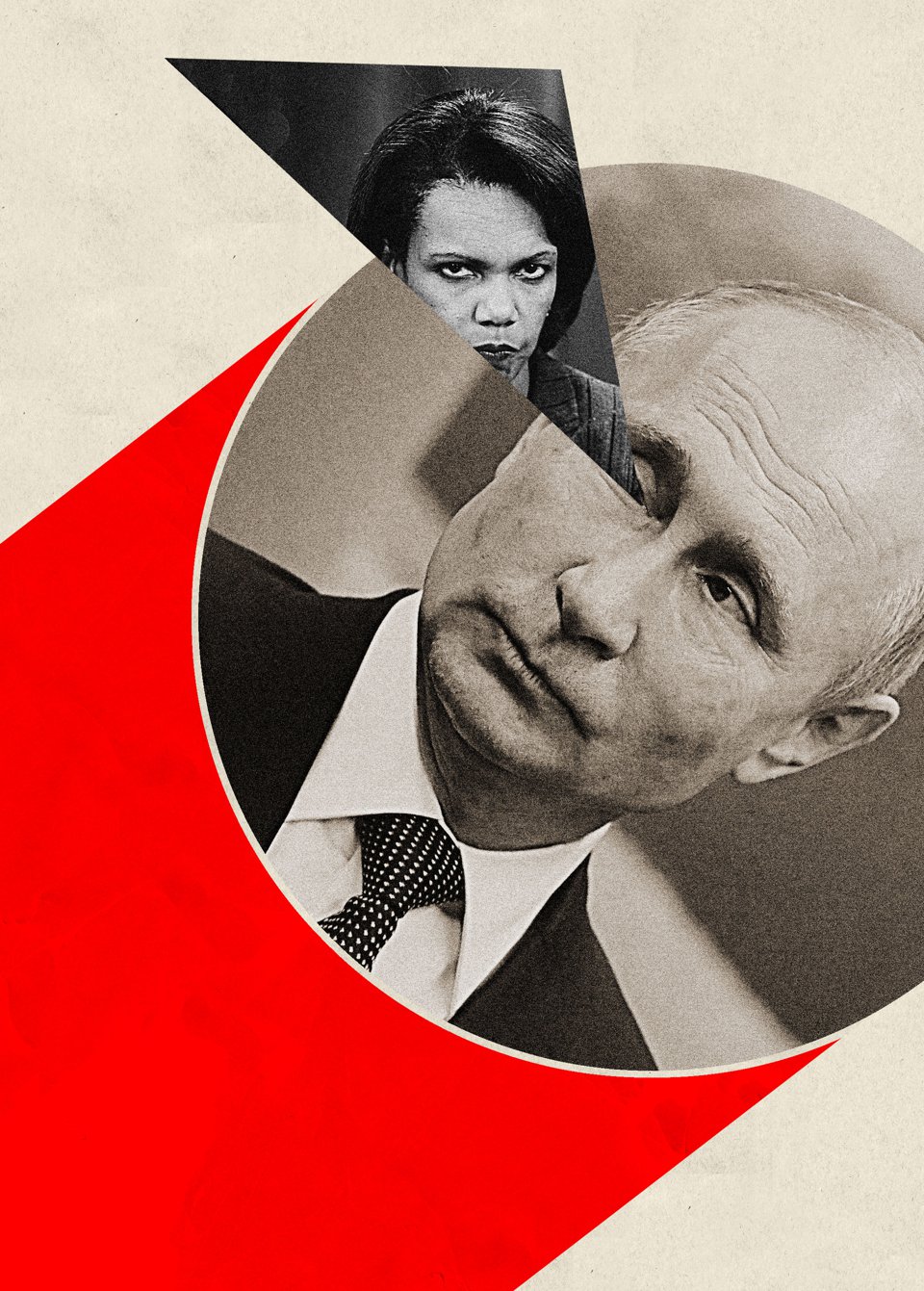
Illustration by Lincoln Agnew; photos by David Brauchli / Peter Turnley / Getty / Alexander Zemlianichenko / AP  

I arrived back in Moscow as the U.S. embassy's chief political officer in 1994, some two and a half years after the Soviet Union's collapse. The sense of possibility was already fading by then, and the difficulties of constructing something new to replace the old Soviet system were becoming apparent. The embassy, a ramshackle mustard-colored building not far from the Moscow River, had been in service since the 1950s. A fire in 1991 had done considerable damage to it; Russian intelligence agents had rushed to the scene, thinly disguised as firefighters. Nearby stood an Orthodox church thought to be so jam-packed with listening and monitoring equipment that it was known as "Our Lady of Immaculate Reception." Old habits and mutual suspicions die hard.

Across a busy street on the west side of the embassy compound was the Russian White House, which still bore scars from a failed revolt against Yeltsin nine months earlier. Yeltsin himself was a wounded figure. His heroic democratic aura chipped and tarnished, he was drinking too much and governing erratically. The changeover to a market economy had not erased the country's profound economic and social problems. Industrial production had fallen by half since 1991. Agricultural output was dropping too. At least 30 percent of the population was living below the poverty line, and inflation had wiped out the meager savings of pensioners. The public-health system had collapsed, and contagious diseases such as tuberculosis and diphtheria were reemerging.

Lawlessness was pervasive. One afternoon in the early fall of 1995, someone fired a rocket-propelled grenade at the embassy building. The round pierced a wall on the sixth floor and detonated in a copy machine, sending metal fragments and glass in all directions. Miraculously, no one was injured. It tells you a lot about Moscow in those days that walking around the city in broad daylight with an RPG was not wildly out of the ordinary.

The problems—and the chaos—of Russian life grew even more stark as you traveled away from the capital. In Vladivostok, then the murky heart of Russia's "wild east," I talked with local Mafia bosses, expansive in their description of "business possibilities," none of which sounded much like the new market models that Western advisers were earnestly promoting in Moscow and St. Petersburg. Waiting to depart on one wintry trip to the North Caucasus, I watched as a technician for Air Dagestan, one of Aeroflot's countless dodgy post-Soviet spin-offs, de‑iced the wings of the battered old Ilyushin aircraft with a blowtorch. In the cockpit, a rheumy-eyed pilot was putting away a half-empty bottle of vodka.

Nothing captured more vividly the disarray of Yeltsin's Russia than the brutal ineptitude of the first Chechen war. In the spring of 1995, I drove to Grozny, Chechnya's capital. The Chechen rebel leader, Dzhokhar Dudayev, had only recently retreated with his forces, into the hills. Roadside stands peddled everything from soft drinks and vodka to weapons and ammunition. Atop Soviet-era armored personnel carriers sat Russian troops wearing bandannas, reflector sunglasses, and sleeveless T‑shirts. Equipped with bandoliers and large knives in their belts, they looked more like gang members than professional soldiers.

I drove past burned-out houses and shops in the little town of Samashki, where these same troops, reportedly drunk and eager for revenge after their losses in the war, had the week before massacred 200 Chechens, mostly women, children, and elderly men. In Grozny itself, 40 square blocks had been leveled by Russian bombing during the war—a campaign that left thousands dead. The city looked like a smaller version of Stalingrad in 1943.

It was a terrible sight. It was also a glimpse of how far Russia had fallen since the Soviet Union's collapse; here were the ill-fed and ill-trained remnants of the Red Army, once reputed to be capable of reaching the English Channel in 48 hours, now unable to suppress a local rebellion in an isolated republic. And here was Boris Yeltsin, who had so courageously defied the hard-liners in August 1991 and buried the Communist system for good, exposed as an infirm leader unable to restore order. The promise of Russia's post-Communist transition was not yet extinguished, but it was beginning to flicker.

So was the promise of a U.S.-Russian partnership. In December 1994, on the eve of a visit by Vice President Al Gore to Moscow, I had tried to capture Russia's domestic predicament in a cable to Washington. "Winter in Russia is not a time for optimists, and in some respects the popular mood here mirrors the descending gloom. Born of a mood of national regret over the loss of superpower status and an equally acute sense that the West is taking advantage of Russia's weakness," I wrote, assertive policies abroad had become one of the few themes that united Russians. Yeltsin wished to reaffirm Russia's great-power status, and its interests in the neighboring post-Soviet republics.

President Bill Clinton tried hard to manage Russia's post-traumatic stress disorder, but his push for the eastward expansion of NATO reinforced Russian resentments. When I left Moscow after my first tour, in early 1996, I worried about the eventual resurgence of a Russia stewing in its own grievances and insecurities. I just had no idea that this would happen so quickly, or that Vladimir Putin—then an obscure bureaucrat—would emerge as the embodiment of that peculiarly Russian combination of qualities.

"You Americans need to listen more," President Putin said as I handed him my credentials as ambassador, before I had gotten a word out of my mouth. "You can't have everything your way anymore. We can have effective relations, but not just on your terms." It was 2005, and in the ensuing years I would hear that message again and again, as unsubtle and defiantly charmless as the man himself.

Putin had been president for five years then. He seemed in many ways the anti-Yeltsin—younger, sober, fiercely competent, hardworking and hard-faced. Surfing on high energy prices and the benefits of some smart early economic reforms, as well as the ruthlessly successful prosecution of a second Chechen war, he was determined to show that Russia would no longer be the potted plant of major-power politics.

Early on in his Kremlin tenure, Putin had tested, with President George W. Bush, a form of partnership suited to his view of Russian interests and prerogatives. He imagined a common front in the post-9/11 War on Terror, in return for acceptance of Russia's special influence in the former Soviet Union, with no encroachment by NATO beyond the Baltics and no interference in Russia's domestic politics. But this kind of transaction was never in the cards. Putin fundamentally misread American interests and politics. The Bush administration had no desire—and saw no reason—to trade anything for a Russian partnership against al‑Qaeda. It had little inclination to concede much to a declining power.

Before long, the excesses of Putinism began to eat up its successes. Corruption deepened, as Putin sought to lubricate political control and steadily monopolize wealth within his circle. His suspicions of America's motives also deepened. "Uncomfortable personally with political competition and openness, Putin has never been a democratizer," I wrote in a cable to Secretary of State Condoleezza Rice, pushing my capacity for understatement to its limits. Democracy promotion was, to him, a Trojan horse, designed to further American geopolitical interests at Russia's expense and erode the sphere of influence that he viewed as a great-power entitlement. When the Orange Revolution in Ukraine and the Rose Revolution in Georgia ousted pro-Russian leaders, Putin's neuralgia intensified.

In October 2006, I joined Rice in a conversation with Putin, in front of a roaring fire at a Russian presidential compound on the outskirts of Moscow. He'd kept us waiting for some three hours—a regular ploy he used to unsettle and demean foreign leaders. Rice had passed the time calmly, watching a Russian sports station on TV; she betrayed no annoyance when we were finally granted our audience. The discussion meandered, until she began to make a case against Russia's escalation of tension with Georgia and its pro-NATO, pro-Western president, Mikheil Saakashvili. Like most of the Russian political elite, Putin expected deference from smaller neighbors, and Saakashvili was passionately undeferential.

Putin's intimidating aura is often reinforced by his controlled mannerisms, modulated tone, and steady gaze. But he can get quite animated if he wants to drive home a point, his eyes flashing and his voice rising in pitch. Standing before the fire, Putin wagged his index finger and warned, "If Saakashvili starts something, we will finish it." Rice stood at that point too, looming several inches taller than Putin in her heels. Having to look up at the secretary did not improve his disposition.

"Saakashvili is nothing more than a puppet of the United States," Putin said sharply. "You need to pull back on the strings before there's trouble." The fireplace exchange eventually ratcheted down, but tensions over Georgia and Ukraine never did. Putin kept up the pressure. Concerned about the Russian reaction when the Bush administration launched an end-of-term, legacy-defining campaign to open the door to Ukraine's and Georgia's membership in NATO, I warned of train wrecks ahead.

On a dreary February afternoon in 2008, as snow fell steadily outside my office window, I wrote a long personal email to Secretary Rice, emphasizing that Putin would see any move toward NATO membership for Ukraine and Georgia as a serious and deliberate challenge. "Today's Russia will respond," I continued. "It will create fertile soil for Russian meddling in Crimea and eastern Ukraine. The prospects of subsequent Russian-Georgian conflict would be high." Within a few months, Putin had baited Saakashvili into conflict, and Russia had invaded Georgia.

Throughout this period, domestic repression was building. Two weeks before Putin and Rice squared off in front of the fireplace, Anna Politkovskaya, a fearless journalist who had covered the wars in Chechnya and a variety of abuses in Russian society, was gunned down in her Moscow apartment building. Some suspected it was no coincidence that the murder happened on Putin's birthday.

As a mark of respect, and of what the United States stood for, I went to Politkovskaya's funeral. I recall the day well—a cold autumn afternoon, dusk settling, snowflakes in the air, long lines of mourners (about 3,000 altogether) shuffling slowly toward the hall where her casket lay. Not a single representative of the Russian government showed up.

The following year, in a blunt private conversation with me, Putin accused the U.S. embassy and American NGOs of funneling money and support to critics of the Kremlin in the lead-up to the national elections. "Outside interference in our elections," he told me, "will not be tolerated." With the most even tone I could manage, I said that his accusations were baseless, and that the outcome of Russia's elections was for Russians alone to decide. Putin listened, offered a tight-lipped smile, and replied, "Don't think we won't react to outside interference."

Illustration by Lincoln Agnew; photos by Ludovic Marin / Getty / Ivan Sekretarev / AP

President Barack Obama first met with Putin in Moscow in July 2009, and I accompanied him. I was now the State Department's undersecretary for political affairs, having concluded my tour as ambassador in May 2008. Putin had handed off the presidency to Dmitry Medvedev and become prime minister, but he remained the ultimate decision maker.

En route to Putin's dacha outside the city, I suggested that Obama open the meeting with a question. Why not ask Putin for his candid assessment of what he thought had gone right, and what had gone wrong, in Russian-American relations over the past decade? Putin liked being asked his opinion, and he certainly wasn't shy. Maybe letting him get some things off his chest would set a good tone. The president nodded.

Obama's initial question produced an unbroken 55-minute monologue filled with grievances, sharp asides, and acerbic commentary. I sat wondering about the wisdom of my advice and my future in the new administration.

Obama listened patiently, and then delivered his own firm message on the possibilities of a "reset" of the relationship. He was matter-of-fact about the two countries' differences, and didn't gloss over the profound problems that Russia's actions in Georgia had caused. He said it was in neither of our interests to let our disagreements obscure those areas where we could each benefit by working together, and where U.S.-Russian leadership could contribute to international order. We should explore the possibilities of cooperation, he explained, without inflating expectations. Putin was wary, but said he was willing to try.

Some eight months later, I accompanied Hillary Clinton, then the secretary of state, to Putin's dacha. He was mildly combative at the outset of the meeting, while the Russian press was in the room: gloating about American economic difficulties and expressing his skepticism of Washington's seriousness about strengthening economic relations with Russia. Slouching a little in his chair, his legs spread wide, he looked every bit the sullen and surly kid in the back of the classroom (an image that Obama once, undiplomatically, used himself in public).

The secretary and I had talked earlier that day about Putin's love of the outdoors and fascination with big animals, as well as the bare-chested persona he obsessively cultivated. She asked him to talk a little about his highly publicized efforts to save Siberian tigers from extinction. Putin's demeanor changed visibly, and he described with uncharacteristic excitement some of his recent trips to the Russian far east. He stood up and asked Clinton to come with him to his private office. I trailed them down several hallways, past startled guards and assistants. Arriving at his office, he proceeded to show the secretary, on a large map of Russia covering most of one wall, the areas he had visited on his Siberian-tiger trips, as well as areas in the north where he planned to go that summer to tranquilize and tag polar bears. With genuine enthusiasm, he asked whether former President Clinton might like to come along, or maybe even the secretary herself?

I had never seen Putin so animated. The secretary applauded his commitment to wildlife conservation, and said this might be another area where Russia and America could work together more. She politely deflected the invitation, although she promised to mention it to her husband. As we rode back to Moscow after the meeting, Clinton smiled and affirmed that neither she nor her husband would be spending their summer vacation with Putin near the Arctic Circle.

To see Putin so enthusiastic about Siberian wildlife and so dour about nearly every aspect of the U.S.-Russia relationship underscored the limited potential of our ties. With Medvedev in the Kremlin, Obama struggled to stay connected to Putin, whose suspicions never really eased, and who was still inclined to paint the U.S. as a threat in order to legitimize his repressive bent at home. We managed a string of tangible accomplishments: a new nuclear-arms-reduction treaty; a military transit agreement for Afghanistan; a partnership on the Iranian nuclear issue. But the upheavals of the Arab Spring unnerved Putin; he reportedly watched the grisly video of the demise of the Libyan leader Muammar Qaddafi—caught hiding in a drainage pipe and killed by Western-backed rebels—over and over again. Domestically, as oil prices fell and his rickety, resource-dependent economy slowed, he worried that it would be hard to sustain his old social contract, whereby he exercised full control over politics in return for ensuring rising living standards and a measure of prosperity.

When Putin decided to return to the presidency after Medvedev's term ended in 2012, he was surprised by large street demonstrations, the product of middle-class resentment of worsening corruption and fraudulent parliamentary elections. In a speech in Europe, Clinton sharply criticized the Russian government. "The Russian people, like people everywhere," she said, "deserve the right to have their voices heard and their votes counted." Putin took this personally, and blamed Clinton publicly for sending "a signal" that brought protesters into the streets. Putin has a remarkable capacity for storing up slights and grievances, and assembling them to fit his narrative of the West trying to keep Russia down. Clinton's criticism would rank high in his litany—and help generate an animus that led directly to his meddling against her candidacy in the 2016 U.S. presidential election.


Related Stories


The arc of the U.S.-Russia relationship was already bending in a familiar direction, just as it had, after moments of hope, during the Bush administration, and Bill Clinton's administration before that. In 2014, the crisis in Ukraine dragged it to new depths. After the pro-Russian president of Ukraine fled during widespread protests, Putin annexed Crimea and invaded the Donbass, in eastern Ukraine. If he couldn't have a deferential government in Kiev, he wanted to engineer the next best thing: a dysfunctional Ukraine. For a number of years, Putin had challenged the West in places such as Georgia and Ukraine, where Russia had a meaningful stake and a high appetite for risk. In 2016, a year after I left government, he saw an opportunity for a more direct challenge to the West—an attack on the integrity of its democracies.

Who lost Russia? It's an old argument, and it misses the point. Russia was never ours to lose. Russians lost trust and confidence in themselves after the Cold War, and only they could remake their state and their economy. In the 1990s, the country was in the midst of three simultaneous historical transformations: the collapse of Communism and the transition to a market economy and democracy; the collapse of the Soviet bloc and the security it had provided to historically insecure Russia; and the collapse of the Soviet Union itself, and with it an empire built over several centuries. None of that could be resolved in a single generation, let alone a few years. And none of it could be fixed by outsiders; greater American involvement would not have been tolerated.

The sense of loss and indignity that came with defeat in the Cold War was unavoidable, no matter how many times we and the Russians had told each other that the outcome had no losers, only winners. From that humiliation, and from the disorder of Yeltsin's Russia, grew the deep distrust and smoldering aggressiveness of Putin's.

Illustration by Lincoln Agnew; photos by Mikhail Svetlov / Alex Wong / Getty

The pattern in U.S.-Russian relations has sometimes hinted at historical immutability, as if we were bound to rivalry and unending suspicion. That view might contain a kernel of truth; history matters, and is difficult to escape. But the whole truth is more complicated, and more prosaic. We each had our illusions. America thought that Moscow would eventually get accustomed to being our junior partner, and grudgingly accommodate NATO expansion even up to its border with Ukraine. And Russia always assumed the worst about American motives, and believed that its own corrupt political order and unreformed economy were a sustainable basis for real geopolitical power. We tended to feed each other's pathologies. Too often, we talked past each other.

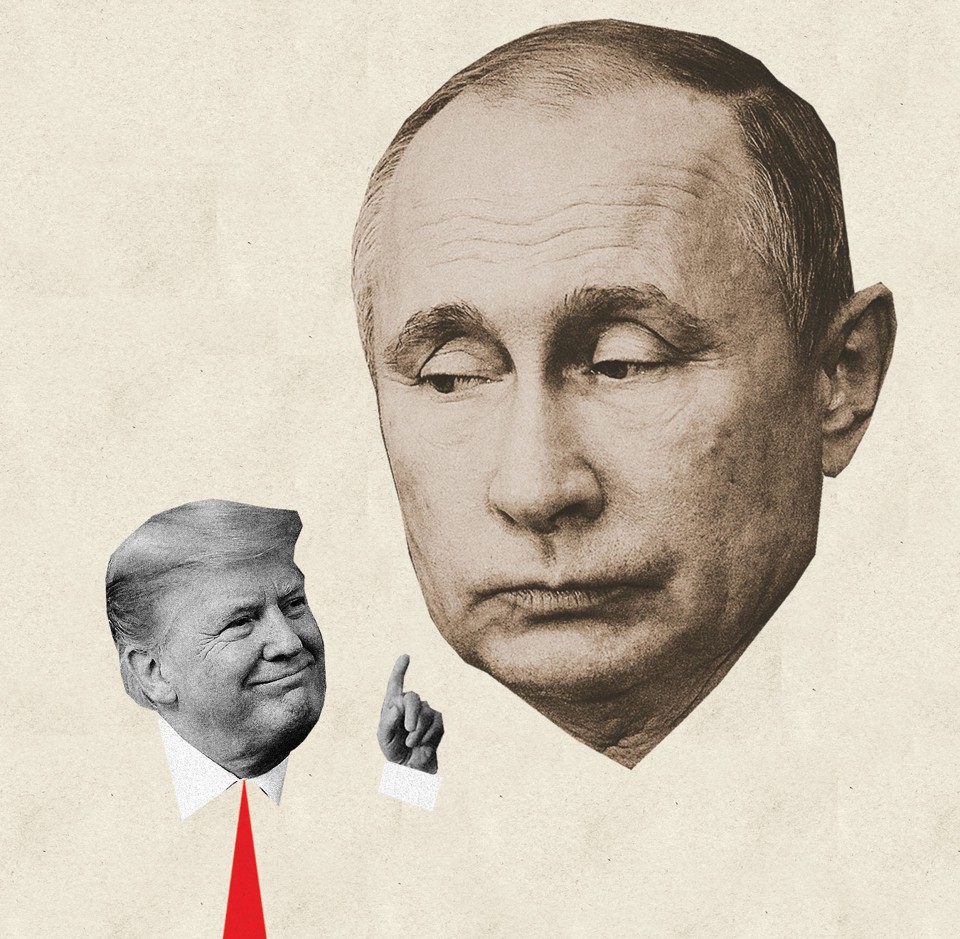
Today, of course, the American relationship with Moscow is more bizarre, and more troubled, than at any point since the end of the Cold War. In Helsinki last summer, President Donald Trump stood alongside Putin, absolved him of election interference, and publicly doubted the conclusions of America's intelligence and law-enforcement services.

Trump's narcissism, breathtaking disregard for history, and unilateral diplomatic disarmament are a depressing trifecta at a moment when Russia poses threats that were unimaginable a quarter century ago. He seems oblivious to the reality that "getting along" with rivals like Putin is not the aim of diplomacy, which is all about advancing tangible interests.

Managing relations with Russia will be a long game, conducted within a relatively narrow band of possibilities. Navigating such a great-power rivalry requires tactful diplomacy—maneuvering in the gray area between peace and war; demonstrating a grasp of the limits of the possible; building leverage; exploring common ground where we can find it; and pushing back firmly and persistently where we can't.

The path ahead with Russia will get rockier before it gets easier. We ought to traverse it without illusions, mindful of Russia's interests and sensibilities, unapologetic about our values, and confident in our own enduring strengths. We should not give in to Putin—or give up on the Russia beyond him.


This article is adapted from William J. Burns's new book, The Back Channel: A Memoir of American Diplomacy and the Case for Its Renewal. It appears in the April 2019 print edition with the headline "Witness to the Counterrevolution."

Did Russia really chase a US bomber out of its airspace? - CNN

');$vidEndSlate.removeClass('video__end-slate--inactive').addClass('video__end-slate--active');}};CNN.autoPlayVideoExist = (CNN.autoPlayVideoExist === true) ? true : false;var configObj = {thumb: 'none',video: 'politics/2019/03/20/us-bombers-deploy-warning-russia-putin-starr-dnt-lead-vpx.cnn',width: '100%',height: '100%',section: 'international',profile: 'expansion',network: 'cnn',markupId: 'large-media_0',adsection: 'const-article-carousel-pagetop',frameWidth: '100%',frameHeight: '100%',posterImageOverride: {"mini":{"width":220,"type":"jpg","uri":"//cdn.cnn.com/cnnnext/dam/assets/190320173754-b-52-bomber-starr-dnt-vpx-small-169.jpg","height":124},"xsmall":{"width":307,"type":"jpg","uri":"//cdn.cnn.com/cnnnext/dam/assets/190320173754-b-52-bomber-starr-dnt-vpx-medium-plus-169.jpg","height":173},"small":{"width":460,"type":"jpg","uri":"//cdn.cnn.com/cnnnext/dam/assets/190320173754-b-52-bomber-starr-dnt-vpx-large-169.jpg","height":259},"medium":{"width":780,"type":"jpg","uri":"//cdn.cnn.com/cnnnext/dam/assets/190320173754-b-52-bomber-starr-dnt-vpx-exlarge-169.jpg","height":438},"large":{"width":1100,"type":"jpg","uri":"//cdn.cnn.com/cnnnext/dam/assets/190320173754-b-52-bomber-starr-dnt-vpx-super-169.jpg","height":619},"full16x9":{"width":1600,"type":"jpg","uri":"//cdn.cnn.com/cnnnext/dam/assets/190320173754-b-52-bomber-starr-dnt-vpx-full-169.jpg","height":900},"mini1x1":{"width":120,"type":"jpg","uri":"//cdn.cnn.com/cnnnext/dam/assets/190320173754-b-52-bomber-starr-dnt-vpx-small-11.jpg","h eight":120}}},autoStartVideo = false,isVideoReplayClicked = false,callbackObj,containerEl,currentVideoCollection = [{"title":"US sends bombers to Europe in message to Putin","duration":"01:51","sourceName":"CNN","sourceLink":"http://www.cnn.com","videoCMSUrl":"/video/data/3.0/video/politics/2019/03/20/us-bombers-deploy-warning-russia-putin-starr-dnt-lead-vpx.cnn/index.xml","videoId":"politics/2019/03/20/us-bombers-deploy-warning-russia-putin-starr-dnt-lead-vpx.cnn","videoImage":"//cdn.cnn.com/cnnnext/dam/assets/190320173754-b-52-bomber-starr-dnt-vpx-large-169.jpg","videoUrl":"/videos/politics/2019/03/20/us-bombers-deploy-warning-russia-putin-starr-dnt-lead-vpx.cnn/video/playlists/around-the-world/","description":"The US Air Force deployed six B-52 bombers to the UK and more than 1,000 troops to Poland as concerns grow over whether Russia has or will send its own bombers to Crimea. CNN's u003ca href="http://www.cnn.com/profiles/barbara-starr-profile" target="_blank">Barbara Starru003c/a> has the details.","descriptionText":"The US Air Force deployed six B-52 bombers to the UK and more than 1,000 troops to Poland as concerns grow over whether Russia has or will send its own bombers to Crimea. CNN's u003ca href="http://www.cnn.com/profiles/barbara-starr-profile" target="_blank">Barbara Starru003c/a> has the details."},{"title":"Watch chaos in Parliament after Brexit votes fail","duration":"04:40","sourceName":"CNN","sourceLink":"https://www.cnn.com/","videoCMSUrl":"/video/data/3.0/video/world/2019/03/27/brexit-theresa-may-all-options-rejected-letwin-further-vote-cnni-vpx.cnn/index.xml","videoId":"world/2019/03/27/brexit-theresa-may-all-options-rejected-letwin-further-vote-cnni-vpx.cnn","videoImage":"//cdn.cnn.com/cnnnext/dam/assets/190327182249-brexit-votes-fail-house-commons-chaos-large-169.jpg","videoUrl":"/videos/world/2019/03/27/brexit-theresa-may-all-options-rejected-letwin-further-vote-cnni-vpx.cnn/video/playlists/around-the-world/","description":"None of the eight options that British lawmakers voted on previously got majority support from MPs. Conservative lawmaker Oliver Letwin, the architect of the plan to hold the votes, immediately proposed further voting on April 1, 2019.","descriptionText":"None of the eight options that British lawmakers voted on previously got majority support from MPs. Conservative lawmaker Oliver Letwin, the architect of the plan to hold the votes, immediately proposed further voting on April 1, 2019."},{"title":"CNN gets exclusive look inside war-torn Yemen","duration":"03:19","sourceName":"CNN","sourceLink":"https://www.cnn.com/?refresh=1","videoCMSUrl":"/video/data/3.0/video/world/2019/03/27/yemen-war-anniversary-access-inside-us-role-kiley-dnt-vxp.cnn/index.xml","videoId":"world/2019/03/27/yemen-war-anniversary-access-inside-us-role-kiley-dnt-vxp.cnn","videoImage":"//cdn.cnn.com/cnnnext/dam/assets/190327020541-yemen-anniversary-protest-large-169.jpg","videoUrl":"/videos/world/2019/03/27/yemen-war-anniversary-access-inside-us-role-kiley-dnt-vxp.cnn/video/playlists/around-the-world/","description":"As the war in Yemen enters its fifth year, the country is facing a humanitarian crisis that has led to countless civilian deaths and hundreds protesting against the United States' and Saudi Arabia's involvement in the conflict. CNN's Sam Kiley reports.","descriptionText":"As the war in Yemen enters its fifth year, the country is facing a humanitarian crisis that has led to countless civilian deaths and hundreds protesting against the United States' and Saudi Arabia's involvement in the conflict. CNN's Sam Kiley reports."},{"title":"Israeli military: New airstrikes in Gaza","duration":"01:27","sourceName":"CNN","sourceLink":"http://www.cnn.com","videoCMSUrl":"/video/data/3.0/video/world/2019/03/26/israel-military-airstrikes-hamas-targets-gaza-liebermann-tsr-vpx.cnn/index.xml","videoId":"world/2019/03/26/israel-military-airstrikes-hamas-targets-gaza-liebermann-tsr-vpx.cnn","videoImage":"//cdn.cnn.com/cnnnext/dam/assets/190326191845-israel-military-airstrikes-hamas-targets-gaza-liebermann-tsr-vpx-00011316-large-169.jpg","videoUrl":"/videos/world/2019/03/26/israel-military-airstrikes-hamas-targets-gaza-liebermann-tsr-vpx.cnn/video/playlists/around-the-world/","description":"Israel's military says it has carried out new airstrikes against Hamas targets in Gaza after more rocket fire aimed toward Israel. CNN's u003ca href="http://www.cnn.com/profiles/oren-liebermann" target="_blank">Oren Liebermannu003c/a> has the latest from Jerusalem.","descriptionText":"Israel's military says it has carried out new airstrikes against Hamas targets in Gaza after more rocket fire aimed toward Israel. CNN's u003ca href="http://www.cnn.com/profiles/oren-liebermann" target="_blank">Oren Liebermannu003c/a> has the latest from Jerusalem."},{"title":"US helping to build Saudi Arabia's air marshal program","duration":"01:35","sourceName":"CNN","sourceLink":"http://www.cnn.com","videoCMSUrl":"/video/data/3.0/video/us/2019/03/27/saudi-air-marshal-us-government-helps-train-program-atwood-vpx.cnn/index.xml","videoId":"us/2019/03/27/saudi-air-marshal-us-government-helps-train-program-atwood-vpx.cnn","videoImage":"//cdn.cnn.com/cnnnext/dam/assets/190311091225-saudi-plane-stock-large-169.jpg","videoUrl":"/videos/us/2019/03/27/saudi-air-marshal-us-government-helps-train-program-atwood-vpx.cnn/video/playlists/around-the-world/","description":"The US government is conducting a training program with the government of Saudi Arabia to aid them in standing up an air marshal program similar to that of the United States. CNN national security reporter u003ca href="http://www.cnn.com/profiles/kylie-atwood" target="_blank">Kylie Atwoodu003c/a> reports.","descriptionText":"The US government is conducting a training program with the government of Saudi Arabia to aid them in standing up an air marshal program similar to that of the United States. CNN national security reporter u003ca href="http://www.cnn.com/profiles/kylie-atwood" target="_blank">Kylie Atwoodu003c/a> reports."},{"title":"Russian military support to Venezuela causing US tension","duration":"02:51","sourceName":"CNN","sourceLink":"https://www.cnn.com/","videoCMSUrl":"/video/data/3.0/video/politics/2019/03/26/venezuela-russia-military-us-tensions-pompeo-newton-dnt-lead-vpx.cnn/index.xml","videoId":"politics/2019/03/26/venezuela-russia-military-us-tensions-pompeo-newton-dnt-lead-vpx.cnn","videoImage":"//cdn.cnn.com/cnnnext/dam/assets/190325183044-cnndinero-vzla-military-0325-dinero-only-large-169.jpg","videoUrl":"/videos/politics/2019/03/26/venezuela-russia-military-us-tensions-pompeo-newton-dnt-lead-vpx.cnn/video/playlists/around-the-world/","description":"US Secretary of State Mike Pompeo spoke with Russian Foreign Minister Sergey Lavrov and called on Russia "to cease its unconstructive behavior" in Venezuela, State Department spokesman Robert Palladino said in a statement. CNN's Paula Newton reports.","descriptionText":"US Secretary of State Mike Pompeo spoke with Russian Foreign Minister Sergey Lavrov and called on Russia "to cease its unconstructive behavior" in Venezuela, State Department spokesman Robert Palladino said in a statement. CNN's Paula Newton reports."},{"title":"EU passes new internet copyright rules","duration":"02:30","sourceName":"CNN Business","sourceLink":"","videoCMSUrl":"/video/data/3.0/video/business/2019/03/26/eu-copyright-rules.cnn-business/index.xml","videoId":"business/2019/03/26/eu-copyright-rules.cnn-business","videoImage":"//cdn.cnn.com/cnnnext/dam/assets/190326110053-01-eu-copyright-0326-large-169.jpg","videoUrl":"/videos/business/2019/03/26/eu-copyright-rules.cnn-business/video/playlists/around-the-world/","description":"The European Parliament approved an overhaul of rules that make platforms such as YouTube responsible for copyright infringements committed by their users. Major tech companies argue the changes will be costly and limit free expression. ","descriptionText":"The European Parliament approved an overhaul of rules that make platforms such as YouTube responsible for copyright infringements committed by their users. Major tech companies argue the changes will be costly and limit free expression. "},{"title":"Foreign ISIS members not wanted in home countries","duration":"04:07","sourceName":"CNN","sourceLink":"https://www.cnn.com/","videoCMSUrl":"/video/data/3.0/video/world/2019/03/26/isis-foreigners-rejected-karadsheh-pkg-vpx.cnn/index.xml","videoId":"world/2019/03/26/isis-foreigners-rejected-karadsheh-pkg-vpx.cnn","videoImage":"//cdn.cnn.com/cnnnext/dam/assets/190326040034-isis-karadsheh-pkg-3-26-2019-large-169.jpg","videoUrl":"/videos/world/2019/03/26/isis-foreigners-rejected-karadsheh-pkg-vpx.cnn/video/playlists/around-the-world/","description":"Left over from the war against ISIS are thousands of foreign men, women and their children now in the custody of US-backed Syrian Democratic Forces (SDF). As those foreigners' home nations seem to be reluctant to take them back, the SDF is worried these stranded and rejected people are now left for them to deal with.","descriptionText":"Left over from the war against ISIS are thousands of foreign men, women and their children now in the custody of US-backed Syrian Democratic Forces (SDF). As those foreigners' home nations seem to be reluctant to take them back, the SDF is worried these stranded and rejected people are now left for them to deal with."},{"title":"Video shows student's kidnapping by masked men","duration":"01:41","sourceName":"CBC News","sourceLink":"https://www.cbc.ca/","videoCMSUrl":"/video/data/3.0/video/world/2019/03/26/chinese-student-missing-ontario-canada-dnt-vpx.cbc-news/index.xml","videoId":"world/2019/03/26/chinese-student-missing-ontario-canada-dnt-vpx.cbc-news","videoImage":"//cdn.cnn.com/cnnnext/dam/assets/190326100230-wanzhen-lu-large-169.jpg","videoUrl":"/videos/world/2019/03/26/chinese-student-missing-ontario-canada-dnt-vpx.cbc-news/video/playlists/around-the-world/","description":"Police in Canada are searching for Lu Wanzhen, a 22-year-old Chinese international student whose apparent abduction by a group of masked men was caught on camera in the Ontario city of Markham.","descriptionText":"Police in Canada are searching for Lu Wanzhen, a 22-year-old Chinese international student whose apparent abduction by a group of masked men was caught on camera in the Ontario city of Markham."},{"title":"Parliament votes to seize control of Brexit process","duration":"01:59","sourceName":"CNN","sourceLink":"https://www.cnn.com/","videoCMSUrl":"/video/data/3.0/video/world/2019/03/25/brexit-letwin-amendment-vote-parliament-prime-minister-theresa-may-cnni-vpx.cnn/index.xml","videoId":"world/2019/03/25/brexit-letwin-amendment-vote-parliament-prime-minister-theresa-may-cnni-vpx.cnn","videoImage":"//cdn.cnn.com/cnnnext/dam/assets/190325180823-house-of-commons-brexit-0325-screengrab-large-169.jpg","videoUrl":"/videos/world/2019/03/25/brexit-letwin-amendment-vote-parliament-prime-minister-theresa-may-cnni-vpx.cnn/video/playlists/around-the-world/","description":"British members of Parliament voted to seize control of the Parliamentary agenda from Prime Minister Theresa May. The Letwin amendment is designed to give lawmakers a chance to vote on alternatives to May's Withdrawal Agreement. ","descriptionText":"British members of Parliament voted to seize control of the Parliamentary agenda from Prime Minister Theresa May. The Letwin amendment is designed to give lawmakers a chance to vote on alternatives to May's Withdrawal Agreement. "},{"title":"Saudi sisters who escaped oppression are now free","duration":"03:19","sourceName":"CNN","sourceLink":"http://www.cnn.com","videoCMSUrl":"/video/data/3.0/video/world/2019/03/25/saudi-sisters-escape-abuse-gender-oppression-hong-kong-watson-pkg-vpx.cnn/index.xml","videoId":"world/2019/03/25/saudi-sisters-escape-abuse-gender-oppression-hong-kong-watson-pkg-vpx.cnn","videoImage":"//cdn.cnn.com/cnnnext/dam/assets/190325190018-02-saudi-sisters-hong-kong-large-169.jpg","videoUrl":"/videos/world/2019/03/25/saudi-sisters-escape-abuse-gender-oppression-hong-kong-watson-pkg-vpx.cnn/video/playlists/around-the-world/","description":"More than six months after they were stopped by Saudi officials at Hong Kong's International Airport, two sisters who were determined to leave a life of oppression in Saudi Arabia are free. CNN's u003ca href="http://www.cnn.com/profiles/ivan-watson" target="_blank">Ivan Watsonu003c/a> reports.","descriptionText":"More than six months after they were stopped by Saudi officials at Hong Kong's International Airport, two sisters who were determined to leave a life of oppression in Saudi Arabia are free. CNN's u003ca href="http://www.cnn.com/profiles/ivan-watson" target="_blank">Ivan Watsonu003c/a> reports."},{"title":" Israel strikes Hamas targets after rocket hits house","duration":"01:48","sourceName":"CNN","sourceLink":"","videoCMSUrl":"/video/data/3.0/video/world/2019/03/25/gaza-rocket-hits-mishmeret-israel-sc-orig-intl.cnn/index.xml","videoId":"world/2019/03/25/gaza-rocket-hits-mishmeret-israel-sc-orig-intl.cnn","videoImage":"//cdn.cnn.com/cnnnext/dam/assets/190325184706-israel-airstrike-large-169.jpg","videoUrl":"/videos/world/2019/03/25/gaza-rocket-hits-mishmeret-israel-sc-orig-intl.cnn/video/playlists/around-the-world/","description":"Israel launched strikes against Hamas targets in Gaza, hours after a rocket fired from the coastal strip hit a home in central Israel.","descriptionText":"Israel launched strikes against Hamas targets in Gaza, hours after a rocket fired from the coastal strip hit a home in central Israel."},{"title":"Buy this isle in Sicily from $1.1 million ","duration":"00:48","sourceName":"CNN","sourceLink":"","videoCMSUrl":"/video/data/3.0/video/travel/2019/03/22/one-million-euro-island-in-sicily-mxb-lon-orig.cnn/index.xml","videoId":"travel/2019/03/22/one-million-euro-island-in-sicily-mxb-lon-orig.cnn","videoImage":"//cdn.cnn.com/cnnnext/dam/assets/190322140749-million-euro-island-1-large-169.jpg","videoUrl":"/videos/travel/2019/03/22/one-million-euro-island-in-sicily-mxb-lon-orig.cnn/video/playlists/around-the-world/","description":"Isola delle Femmine is in the heart of a scuba diving and snorkeling mecca off the coast of Sicily. It could be yours for as little as $1.1 million. ","descriptionText":"Isola delle Femmine is in the heart of a scuba diving and snorkeling mecca off the coast of Sicily. It could be yours for as little as $1.1 million. "},{"title":"Passengers rescued from stranded cruise ship describe their ordeal","duration":"01:55","sourceName":"CNN","sourceLink":"","videoCMSUrl":"/video/data/3.0/video/world/2019/03/24/norway-viking-cruise-evacuation-orig-jg.cnn/index.xml","videoId":"world/2019/03/24/norway-viking-cruise-evacuation-orig-jg.cnn","videoImage":"//cdn.cnn.com/cnnnext/dam/assets/190324031245-norway-cruise-passengers-large-169.jpg","videoUrl":"/videos/world/2019/03/24/norway-viking-cruise-evacuation-orig-jg.cnn/video/playlists/around-the-world/","description":"Rescue teams airlifted 479 people from a Viking Sky cruise ship after it was left adrift off the coast of Norway with 1,300 passengers and crew on board.","descriptionText":"Rescue teams airlifted 479 people from a Viking Sky cruise ship after it was left adrift off the coast of Norway with 1,300 passengers and crew on board."},{"title":"Rescue official describes evacuation challenges","duration":"01:36","sourceName":"CNN","sourceLink":"http://www.cnn.com","videoCMSUrl":"/video/data/3.0/video/world/2019/03/23/norway-cruise-ship-evacuation-rescue-official-intv-vpx.cnn/index.xml","videoId":"world/2019/03/23/norway-cruise-ship-evacuation-rescue-official-intv-vpx.cnn","videoImage":"//cdn.cnn.com/cnnnext/dam/assets/190323161037-cruise-ship-rescue-large-169.jpg","videoUrl":"/videos/world/2019/03/23/norway-cruise-ship-evacuation-rescue-official-intv-vpx.cnn/video/playlists/around-the-world/","description":"Borghild Eldoen with the Joint Rescue Centre for Southern Norway describes the rescue efforts to evacuate 1,300 passengers from a cruise ship off the coast.","descriptionText":"Borghild Eldoen with the Joint Rescue Centre for Southern Norway describes the rescue efforts to evacuate 1,300 passengers from a cruise ship off the coast."},{"title":"Source: Pilots trained on Boeing 737 Max in 2.5-hour course","duration":"02:59","sourceName":"CNN","sourceLink":"http://www.cnn.com","videoCMSUrl":"/video/data/3.0/video/us/2019/03/23/pilot-training-boeing-737-max-griffin-pkg-vpx.cnn/index.xml","videoId":"us/2019/03/23/pilot-training-boeing-737-max-griffin-pkg-vpx.cnn","videoImage":"//cdn.cnn.com/cnnnext/dam/assets/190321174911-boeing-investigation-large-169.jpg","videoUrl":"/videos/us/2019/03/23/pilot-training-boeing-737-max-griffin-pkg-vpx.cnn/video/playlists/around-the-world/","description":"CNN's Drew Griffin reports on Boeing and its troubled 737 Max, which is the type of plane at the center of two deadly crashes.","descriptionText":"CNN's Drew Griffin reports on Boeing and its troubled 737 Max, which is the type of plane at the center of two deadly crashes."}],currentVideoCollectionId = '',isLivePlayer = false,mediaMetadataCallbacks,mobilePinnedView = null,moveToNextTimeout,mutePlayerEnabled = false,nextVideoId = '',nextVideoUrl = '',turnOnFlashMessaging = false,videoPinner,videoEndSlateImpl;if (CNN.autoPlayVideoExist === false) {autoStartVideo = true;if (autoStartVideo === true) {if (turnOnFlashMessaging === true) {autoStartVideo = false;containerEl = jQuery(document.getElementById(configObj.markupId));CNN.VideoPlayer.showFlashSlate(containerEl);} else {CNN.autoPlayVideoExist = true;}}}configObj.autostart = CNN.Features.enableAutoplayBlock ? false : autoStartVideo;CNN.VideoPlayer.setPlayerProperties(configObj.markupId, autoStartVideo, isLivePlayer, isVideoReplayClicked, mutePlayerEnabled);CNN.VideoPlayer.setFirstVideoInCollection(currentVideoCollection, configObj.markupId);var videoHandler = {},isFeaturedVideoCollectionHandlerAvailable = (CNN !== undefined &&CNN.VIDEOCLIENT !== undefined &&CNN.VIDEOCLIENT.FeaturedVideoCollectionHandler !== undefined);if (!isFeaturedVideoCollectionHandlerAvailable) {CNN.INJECTOR.executeFeature('videx').done(function () {jQuery.ajax({dataType: 'script',cache: true,url: '//edition.i.cdn.cnn.com/.a/2.146.6/js/featured-video-collection-player.min.js'}).done(function () {initializeVideoAndCollection();}).fail(function () {throw 'Unable to fetch /js/featured-video-collection-player.min.js';});}).fail(function () {throw 'Unable to fetch the videx bundle';});}function initializeVideoAndCollection() {videoHandler = new CNN.VIDEOCLIENT.FeaturedVideoCollectionHandler(configObj.markupId,"cn-featured-huewlv",'js-video_description-featured-huewlv',[{"title":"US sends bombers to Europe in message to Putin","duration":"01:51","sourceName":"CNN","sourceLink":"http://www.cnn.com","videoCMSUrl":"/video/data/3.0/video/politics/2019/03/20/us-bombers-deploy-warning-russia-putin-starr-dnt-lead-vpx.cnn/index.xml","videoId":"politics/2019/03/20/us-bombers-deploy-warning-russia-putin-starr-dnt-lead-vpx.cnn","videoImage":"//cdn.cnn.com/cnnnext/dam/assets/190320173754-b-52-bomber-starr-dnt-vpx-large-169.jpg","videoUrl":"/videos/politics/2019/03/20/us-bombers-deploy-warning-russia-putin-starr-dnt-lead-vpx.cnn/video/playlists/around-the-world/","description":"The US Air Force deployed six B-52 bombers to the UK and more than 1,000 troops to Poland as concerns grow over whether Russia has or will send its own bombers to Crimea. CNN's u003ca href="http://www.cnn.com/profiles/barbara-starr-profile" target="_blank">Barbara Starru003c/a> has the details.","descriptionText":"The US Air Force deployed six B-52 bombers to the UK and more than 1,000 troops to Poland as concerns grow over whether Russia has or will send its own bombers to Crimea. CNN's u003ca href="http://www.cnn.com/profiles/barbara-starr-profile" target="_blank">Barbara Starru003c/a> has the details."},{"title":"Watch chaos in Parliament after Brexit votes fail","duration":"04:40","sourceName":"CNN","sourceLink":"https://www.cnn.com/","videoCMSUrl":"/video/data/3.0/video/world/2019/03/27/brexit-theresa-may-all-options-rejected-letwin-further-vote-cnni-vpx.cnn/index.xml","videoId":"world/2019/03/27/brexit-theresa-may-all-options-rejected-letwin-further-vote-cnni-vpx.cnn","videoImage":"//cdn.cnn.com/cnnnext/dam/assets/190327182249-brexit-votes-fail-house-commons-chaos-large-169.jpg","videoUrl":"/videos/world/2019/03/27/brexit-theresa-may-all-options-rejected-letwin-further-vote-cnni-vpx.cnn/video/playlists/around-the-world/","description":"None of the eight options that British lawmakers voted on previously got majority support from MPs. Conservative lawmaker Oliver Letwin, the architect of the plan to hold the votes, immediately proposed further voting on April 1, 2019.","descriptionText":"None of the eight options that British lawmakers voted on previously got majority support from MPs. Conservative lawmaker Oliver Letwin, the architect of the plan to hold the votes, immediately proposed further voting on April 1, 2019."},{"title":"CNN gets exclusive look inside war-torn Yemen","duration":"03:19","sourceName":"CNN","sourceLink":"https://www.cnn.com/?refresh=1","videoCMSUrl":"/video/data/3.0/video/world/2019/03/27/yemen-war-anniversary-access-inside-us-role-kiley-dnt-vxp.cnn/index.xml","videoId":"world/2019/03/27/yemen-war-anniversary-access-inside-us-role-kiley-dnt-vxp.cnn","videoImage":"//cdn.cnn.com/cnnnext/dam/assets/190327020541-yemen-anniversary-protest-large-169.jpg","videoUrl":"/videos/world/2019/03/27/yemen-war-anniversary-access-inside-us-role-kiley-dnt-vxp.cnn/video/playlists/around-the-world/","description":"As the war in Yemen enters its fifth year, the country is facing a humanitarian crisis that has led to countless civilian deaths and hundreds protesting against the United States' and Saudi Arabia's involvement in the conflict. CNN's Sam Kiley reports.","descriptionText":"As the war in Yemen enters its fifth year, the country is facing a humanitarian crisis that has led to countless civilian deaths and hundreds protesting against the United States' and Saudi Arabia's involvement in the conflict. CNN's Sam Kiley reports."},{"title":"Israeli military: New airstrikes in Gaza","duration":"01:27","sourceName":"CNN","sourceLink":"http://www.cnn.com","videoCMSUrl":"/video/data/3.0/video/world/2019/03/26/israel-military-airstrikes-hamas-targets-gaza-liebermann-tsr-vpx.cnn/index.xml","videoId":"world/2019/03/26/israel-military-airstrikes-hamas-targets-gaza-liebermann-tsr-vpx.cnn","videoImage":"//cdn.cnn.com/cnnnext/dam/assets/190326191845-israel-military-airstrikes-hamas-targets-gaza-liebermann-tsr-vpx-00011316-large-169.jpg","videoUrl":"/videos/world/2019/03/26/israel-military-airstrikes-hamas-targets-gaza-liebermann-tsr-vpx.cnn/video/playlists/around-the-world/","description":"Israel's military says it has carried out new airstrikes against Hamas targets in Gaza after more rocket fire aimed toward Israel. CNN's u003ca href="http://www.cnn.com/profiles/oren-liebermann" target="_blank">Oren Liebermannu003c/a> has the latest from Jerusalem.","descriptionText":"Israel's military says it has carried out new airstrikes against Hamas targets in Gaza after more rocket fire aimed toward Israel. CNN's u003ca href="http://www.cnn.com/profiles/oren-liebermann" target="_blank">Oren Liebermannu003c/a> has the latest from Jerusalem."},{"title":"US helping to build Saudi Arabia's air marshal program","duration":"01:35","sourceName":"CNN","sourceLink":"http://www.cnn.com","videoCMSUrl":"/video/data/3.0/video/us/2019/03/27/saudi-air-marshal-us-government-helps-train-program-atwood-vpx.cnn/index.xml","videoId":"us/2019/03/27/saudi-air-marshal-us-government-helps-train-program-atwood-vpx.cnn","videoImage":"//cdn.cnn.com/cnnnext/dam/assets/190311091225-saudi-plane-stock-large-169.jpg","videoUrl":"/videos/us/2019/03/27/saudi-air-marshal-us-government-helps-train-program-atwood-vpx.cnn/video/playlists/around-the-world/","description":"The US government is conducting a training program with the government of Saudi Arabia to aid them in standing up an air marshal program similar to that of the United States. CNN national security reporter u003ca href="http://www.cnn.com/profiles/kylie-atwood" target="_blank">Kylie Atwoodu003c/a> reports.","descriptionText":"The US government is conducting a training program with the government of Saudi Arabia to aid them in standing up an air marshal program similar to that of the United States. CNN national security reporter u003ca href="http://www.cnn.com/profiles/kylie-atwood" target="_blank">Kylie Atwoodu003c/a> reports."},{"title":"Russian military support to Venezuela causing US tension","duration":"02:51","sourceName":"CNN","sourceLink":"https://www.cnn.com/","videoCMSUrl":"/video/data/3.0/video/politics/2019/03/26/venezuela-russia-military-us-tensions-pompeo-newton-dnt-lead-vpx.cnn/index.xml","videoId":"politics/2019/03/26/venezuela-russia-military-us-tensions-pompeo-newton-dnt-lead-vpx.cnn","videoImage":"//cdn.cnn.com/cnnnext/dam/assets/190325183044-cnndinero-vzla-military-0325-dinero-only-large-169.jpg","videoUrl":"/videos/politics/2019/03/26/venezuela-russia-military-us-tensions-pompeo-newton-dnt-lead-vpx.cnn/video/playlists/around-the-world/","description":"US Secretary of State Mike Pompeo spoke with Russian Foreign Minister Sergey Lavrov and called on Russia "to cease its unconstructive behavior" in Venezuela, State Department spokesman Robert Palladino said in a statement. CNN's Paula Newton reports.","descriptionText":"US Secretary of State Mike Pompeo spoke with Russian Foreign Minister Sergey Lavrov and called on Russia "to cease its unconstructive behavior" in Venezuela, State Department spokesman Robert Palladino said in a statement. CNN's Paula Newton reports."},{"title":"EU passes new internet copyright rules","duration":"02:30","sourceName":"CNN Business","sourceLink":"","videoCMSUrl":"/video/data/3.0/video/business/2019/03/26/eu-copyright-rules.cnn-business/index.xml","videoId":"business/2019/03/26/eu-copyright-rules.cnn-business","videoImage":"//cdn.cnn.com/cnnnext/dam/assets/190326110053-01-eu-copyright-0326-large-169.jpg","videoUrl":"/videos/business/2019/03/26/eu-copyright-rules.cnn-business/video/playlists/around-the-world/","description":"The European Parliament approved an overhaul of rules that make platforms such as YouTube responsible for copyright infringements committed by their users. Major tech companies argue the changes will be costly and limit free expression. ","descriptionText":"The European Parliament approved an overhaul of rules that make platforms such as YouTube responsible for copyright infringements committed by their users. Major tech companies argue the changes will be costly and limit free expression. "},{"title":"Foreign ISIS members not wanted in home countries","duration":"04:07","sourceName":"CNN","sourceLink":"https://www.cnn.com/","videoCMSUrl":"/video/data/3.0/video/world/2019/03/26/isis-foreigners-rejected-karadsheh-pkg-vpx.cnn/index.xml","videoId":"world/2019/03/26/isis-foreigners-rejected-karadsheh-pkg-vpx.cnn","videoImage":"//cdn.cnn.com/cnnnext/dam/assets/190326040034-isis-karadsheh-pkg-3-26-2019-large-169.jpg","videoUrl":"/videos/world/2019/03/26/isis-foreigners-rejected-karadsheh-pkg-vpx.cnn/video/playlists/around-the-world/","description":"Left over from the war against ISIS are thousands of foreign men, women and their children now in the custody of US-backed Syrian Democratic Forces (SDF). As those foreigners' home nations seem to be reluctant to take them back, the SDF is worried these stranded and rejected people are now left for them to deal with.","descriptionText":"Left over from the war against ISIS are thousands of foreign men, women and their children now in the custody of US-backed Syrian Democratic Forces (SDF). As those foreigners' home nations seem to be reluctant to take them back, the SDF is worried these stranded and rejected people are now left for them to deal with."},{"title":"Video shows student's kidnapping by masked men","duration":"01:41","sourceName":"CBC News","sourceLink":"https://www.cbc.ca/","videoCMSUrl":"/video/data/3.0/video/world/2019/03/26/chinese-student-missing-ontario-canada-dnt-vpx.cbc-news/index.xml","videoId":"world/2019/03/26/chinese-student-missing-ontario-canada-dnt-vpx.cbc-news","videoImage":"//cdn.cnn.com/cnnnext/dam/assets/190326100230-wanzhen-lu-large-169.jpg","videoUrl":"/videos/world/2019/03/26/chinese-student-missing-ontario-canada-dnt-vpx.cbc-news/video/playlists/around-the-world/","description":"Police in Canada are searching for Lu Wanzhen, a 22-year-old Chinese international student whose apparent abduction by a group of masked men was caught on camera in the Ontario city of Markham.","descriptionText":"Police in Canada are searching for Lu Wanzhen, a 22-year-old Chinese international student whose apparent abduction by a group of masked men was caught on camera in the Ontario city of Markham."},{"title":"Parliament votes to seize control of Brexit process","duration":"01:59","sourceName":"CNN","sourceLink":"https://www.cnn.com/","videoCMSUrl":"/video/data/3.0/video/world/2019/03/25/brexit-letwin-amendment-vote-parliament-prime-minister-theresa-may-cnni-vpx.cnn/index.xml","videoId":"world/2019/03/25/brexit-letwin-amendment-vote-parliament-prime-minister-theresa-may-cnni-vpx.cnn","videoImage":"//cdn.cnn.com/cnnnext/dam/assets/190325180823-house-of-commons-brexit-0325-screengrab-large-169.jpg","videoUrl":"/videos/world/2019/03/25/brexit-letwin-amendment-vote-parliament-prime-minister-theresa-may-cnni-vpx.cnn/video/playlists/around-the-world/","description":"British members of Parliament voted to seize control of the Parliamentary agenda from Prime Minister Theresa May. The Letwin amendment is designed to give lawmakers a chance to vote on alternatives to May's Withdrawal Agreement. ","descriptionText":"British members of Parliament voted to seize control of the Parliamentary agenda from Prime Minister Theresa May. The Letwin amendment is designed to give lawmakers a chance to vote on alternatives to May's Withdrawal Agreement. "},{"title":"Saudi sisters who escaped oppression are now free","duration":"03:19","sourceName":"CNN","sourceLink":"http://www.cnn.com","videoCMSUrl":"/video/data/3.0/video/world/2019/03/25/saudi-sisters-escape-abuse-gender-oppression-hong-kong-watson-pkg-vpx.cnn/index.xml","videoId":"world/2019/03/25/saudi-sisters-escape-abuse-gender-oppression-hong-kong-watson-pkg-vpx.cnn","videoImage":"//cdn.cnn.com/cnnnext/dam/assets/190325190018-02-saudi-sisters-hong-kong-large-169.jpg","videoUrl":"/videos/world/2019/03/25/saudi-sisters-escape-abuse-gender-oppression-hong-kong-watson-pkg-vpx.cnn/video/playlists/around-the-world/","description":"More than six months after they were stopped by Saudi officials at Hong Kong's International Airport, two sisters who were determined to leave a life of oppression in Saudi Arabia are free. CNN's u003ca href="http://www.cnn.com/profiles/ivan-watson" target="_blank">Ivan Watsonu003c/a> reports.","descriptionText":"More than six months after they were stopped by Saudi officials at Hong Kong's International Airport, two sisters who were determined to leave a life of oppression in Saudi Arabia are free. CNN's u003ca href="http://www.cnn.com/profiles/ivan-watson" target="_blank">Ivan Watsonu003c/a> reports."},{"title":" Israel strikes Hamas targets after rocket hits house","duration":"01:48","sourceName":"CNN","sourceLink":"","videoCMSUrl":"/video/data/3.0/video/world/2019/03/25/gaza-rocket-hits-mishmeret-israel-sc-orig-intl.cnn/index.xml","videoId":"world/2019/03/25/gaza-rocket-hits-mishmeret-israel-sc-orig-intl.cnn","videoImage":"//cdn.cnn.com/cnnnext/dam/assets/190325184706-israel-airstrike-large-169.jpg","videoUrl":"/videos/world/2019/03/25/gaza-rocket-hits-mishmeret-israel-sc-orig-intl.cnn/video/playlists/around-the-world/","description":"Israel launched strikes against Hamas targets in Gaza, hours after a rocket fired from the coastal strip hit a home in central Israel.","descriptionText":"Israel launched strikes against Hamas targets in Gaza, hours after a rocket fired from the coastal strip hit a home in central Israel."},{"title":"Buy this isle in Sicily from $1.1 million ","duration":"00:48","sourceName":"CNN","sourceLink":"","videoCMSUrl":"/video/data/3.0/video/travel/2019/03/22/one-million-euro-island-in-sicily-mxb-lon-orig.cnn/index.xml","videoId":"travel/2019/03/22/one-million-euro-island-in-sicily-mxb-lon-orig.cnn","videoImage":"//cdn.cnn.com/cnnnext/dam/assets/190322140749-million-euro-island-1-large-169.jpg","videoUrl":"/videos/travel/2019/03/22/one-million-euro-island-in-sicily-mxb-lon-orig.cnn/video/playlists/around-the-world/","description":"Isola delle Femmine is in the heart of a scuba diving and snorkeling mecca off the coast of Sicily. It could be yours for as little as $1.1 million. ","descriptionText":"Isola delle Femmine is in the heart of a scuba diving and snorkeling mecca off the coast of Sicily. It could be yours for as little as $1.1 million. "},{"title":"Passengers rescued from stranded cruise ship describe their ordeal","duration":"01:55","sourceName":"CNN","sourceLink":"","videoCMSUrl":"/video/data/3.0/video/world/2019/03/24/norway-viking-cruise-evacuation-orig-jg.cnn/index.xml","videoId":"world/2019/03/24/norway-viking-cruise-evacuation-orig-jg.cnn","videoImage":"//cdn.cnn.com/cnnnext/dam/assets/190324031245-norway-cruise-passengers-large-169.jpg","videoUrl":"/videos/world/2019/03/24/norway-viking-cruise-evacuation-orig-jg.cnn/video/playlists/around-the-world/","description":"Rescue teams airlifted 479 people from a Viking Sky cruise ship after it was left adrift off the coast of Norway with 1,300 passengers and crew on board.","descriptionText":"Rescue teams airlifted 479 people from a Viking Sky cruise ship after it was left adrift off the coast of Norway with 1,300 passengers and crew on board."},{"title":"Rescue official describes evacuation challenges","duration":"01:36","sourceName":"CNN","sourceLink":"http://www.cnn.com","videoCMSUrl":"/video/data/3.0/video/world/2019/03/23/norway-cruise-ship-evacuation-rescue-official-intv-vpx.cnn/index.xml","videoId":"world/2019/03/23/norway-cruise-ship-evacuation-rescue-official-intv-vpx.cnn","videoImage":"//cdn.cnn.com/cnnnext/dam/assets/190323161037-cruise-ship-rescue-large-169.jpg","videoUrl":"/videos/world/2019/03/23/norway-cruise-ship-evacuation-rescue-official-intv-vpx.cnn/video/playlists/around-the-world/","description":"Borghild Eldoen with the Joint Rescue Centre for Southern Norway describes the rescue efforts to evacuate 1,300 passengers from a cruise ship off the coast.","descriptionText":"Borghild Eldoen with the Joint Rescue Centre for Southern Norway describes the rescue efforts to evacuate 1,300 passengers from a cruise ship off the coast."},{"title":"Source: Pilots trained on Boeing 737 Max in 2.5-hour course","duration":"02:59","sourceName":"CNN","sourceLink":"http://www.cnn.com","videoCMSUrl":"/video/data/3.0/video/us/2019/03/23/pilot-training-boeing-737-max-griffin-pkg-vpx.cnn/index.xml","videoId":"us/2019/03/23/pilot-training-boeing-737-max-griffin-pkg-vpx.cnn","videoImage":"//cdn.cnn.com/cnnnext/dam/assets/190321174911-boeing-investigation-large-169.jpg","videoUrl":"/videos/us/2019/03/23/pilot-training-boeing-737-max-griffin-pkg-vpx.cnn/video/playlists/around-the-world/","description":"CNN's Drew Griffin reports on Boeing and its troubled 737 Max, which is the type of plane at the center of two deadly crashes.","descriptionText":"CNN's Drew Griffin reports on Boeing and its troubled 737 Max, which is the type of plane at the center of two deadly crashes."}],'js-video_headline-featured-huewlv','',"js-video_source-featured-huewlv",true,true,'around-the-world');if (typeof configObj.context !== 'string' || configObj.context.length

Barbara Bush Blamed Donald Trump for Exacerbating Heart Issues, Author Says - Entertainment Tonight

Skip to main content